Chamomile Extract: Guide to Skin & Hair Benefits
Chamomile Flower Extract Powder is a very important plant ingredient in the personal care and makeup industries. It is highly valued for its proven ability to soothe the skin and care for hair. This extract comes from Matricaria recutita Linn. and contains standardized bioactive chemicals that help product makers solve a number of formulation problems they are having right now. The global haircare and skin care markets are looking for clean-label, plant-based actives more and more. Chamomile Flower Extract Powder is a safe option backed by a lot of studies. This guide tells B2B buyers, formulation scientists, and quality assurance experts how to evaluate sellers, make formulas better, and make sure they follow all the rules in foreign markets.
Understanding Chamomile Flower Extract Powder
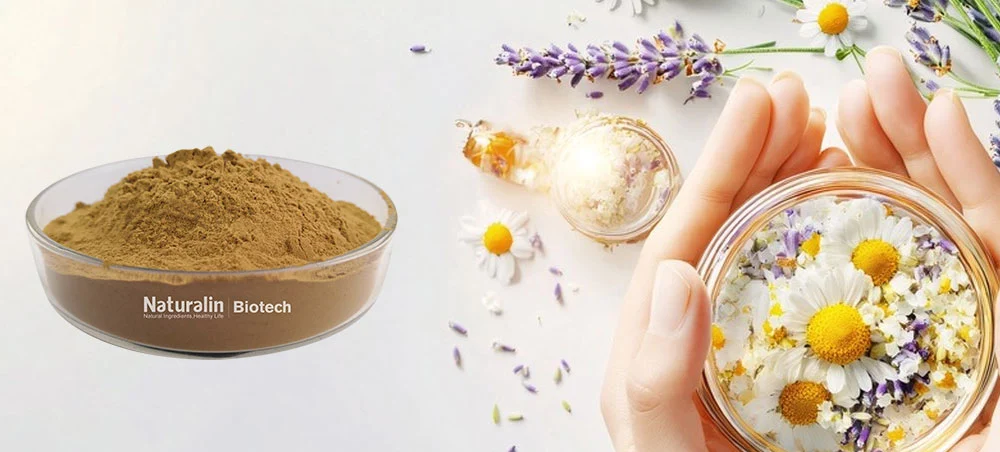
A concentrated plant ingredient called chamomile extract is made from the dried flower heads of the German chamomile plant (Matricaria recutita) using approved extraction methods. Unlike chamomile tea or volatile essential oils, regulated Chamomile Flower Extract Powder is made according to strict rules that make sure the amounts of active compounds are always the same and can be used to make commercial products.
Botanical Origins and Extraction Technologies
German chamomile is grown in cold parts of Europe, mostly in Germany, Hungary, and Egypt, where the flower heads are full of healing chemicals because they grow in the best circumstances. Spray-drying and freeze-drying are two modern methods of extraction that have different effects on the stable profile of the end product. Spray-drying is cost-effective and can be scaled up for large-scale production runs. Freeze-drying, on the other hand, keeps heat-sensitive bioactives at the highest quality levels. Ultrasonic-assisted extraction and supercritical CO2 methods are now used by advanced makers to keep as many bioactives as possible while leaving as few solvent leftovers as possible. This is an important thing for formulators who want to make clean-label claims.
Key Bioactive Compounds and Standardization
The healing power of chamomile extract comes from the fact that it has a complicated phytochemical profile driven by three compound classes. Apigenin is a flavonoid that is usually standardized between 0.3% and 10% using HPLC analysis. It works very well as an antioxidant and an anti-inflammatory in skin care uses. Chamazulene and bisabolol are volatile terpenoids that are made during extraction. They add extra antibacterial and anti-irritant qualities that are important for formulas for sensitive skin. For business-to-business purchases, quality standards should require HPLC-verified apigenin content to be checked by HPLC. Typical market standards call for 0.5% total flavones and 0.03% apigenin-7-glucoside, which should be present in a 2:1 concentration ratio. Suppliers you can trust give you Certificates of Analysis that list these factors along with heavy metal screening (Lead <3.0ppm, Cadmium <1.0ppm) and pesticide residue testing that meets USP standards.
Manufacturing Quality Control Protocols
Good Manufacturing Practices (GMP) and ISO 9001/FSSC22000 standards must be followed when making chamomile extract powder in a factory to make sure that the powder is consistent from batch to batch. The process of making something starts with verifying the raw materials using plant recognition and HPTLC fingerprinting. Then the materials are extracted under controlled conditions of temperature and pressure, and finally, the particles are milled until they are all 80 meshes in size. To keep microbes from growing during storage, the moisture content must stay below 5%. A total ash content below 5% shows that there isn't much mineral contamination. USDA NOP and EU Organic certification options give brands that are trying to reach high-end customers more sourcing choices.
Skin and Hair Benefits of Chamomile Flower Extract Powder
Chamomile extract has many benefits when applied to the skin, and research that goes back decades backs this up. This makes it a useful ingredient for making personal care products. Formulators can improve concentration levels and beneficial combos by understanding how these things work.
Skincare Applications and Mechanisms
Chamomile oil helps with a number of skin problems through different biological processes. Its anti-inflammatory effects, mainly through chamazulene and bisabolol, make products for sensitive skin less red and irritated. Clinical studies show that inflammatory markers go down a lot in people with atopic dermatitis and rosacea when they are exposed to 2% to 3% chamomile extract. Apigenin is an antioxidant that fights free radicals that speed up photoaging. This is why Chamomile Flower Extract Powder is a great addition to serums and day creams that fight aging. The antibacterial qualities of chamomile against Cutibacterium acnes and its ability to stop sebum from oxidizing and comedones from forming are useful for formulators working with acne-prone skin.
Haircare Benefits and Scalp Health
In addition to being good for skin care, chamomile extract is also very good for hair care because it helps with scalp itching and hair shaft health. When added to shampoos and scalp treatments at amounts of 1% to 5%, the extract's anti-inflammatory chemicals help scalp problems like seborrheic dermatitis and dandruff. Chamomile extract can help hair grow naturally because it can stop an enzyme called 5-alpha-reductase from working. This enzyme is linked to androgenic alopecia. Cosmetic scientists like chamomile because it conditions hair, making it easier to style and giving it a natural shine without using wax. Because the extract is mild, it can be used safely in leave-on treatments. This means that it can be used on sensitive scalps that don't like fake smells or preservatives.
Dosage Guidelines and Safety Considerations
To make a good formulation, you need to know the best concentration levels while also taking safety ratings into account. 0.5 to 5% chamomile extract is usually used in skin care products, but this depends on the type of product and the benefits that are wanted. Leave-on products use smaller amounts, while rinse-off products can handle higher levels. Although not common, allergic responses have been recorded, mostly in people who are already sensitive to plants in the Asteraceae family. As part of quality assurance processes, patch tests should be done on new products while they are still being developed, especially for mixtures with more than 3% extract concentration.
Comparison and Selection Guide for Procurement
To find the best Chamomile Flower Extract Powder suppliers, you need to carefully look at them from a range of technical and business points of view. Procurement teams have to find a mix between meeting high standards and making money.
Identifying Certified Manufacturers
The first step in qualifying a supplier is to check that they have the core certifications that show they can make things and follow the rules. ISO 9001 certification means that quality control systems have been in place for a while, and FSSC22000 certification means that food safety rules apply to dietary supplement uses. Manufacturers that want to sell drugs or over-the-counter medicines will have to get GMP approval. Beyond basic certifications, purchasing managers should give more weight to suppliers with USDA NOP, EU Organic certifications and religious compliance certifications (Halal, Kosher) to make it easier to adapt recipes to different markets around the world. Naturalin Biotech is a good example of this method because it has organic qualifications as well as ISO9001, FSSC22000, HALAL, and Kosher certifications. This way, our customers can deal with a wide range of regulatory environments with just one supplier relationship.
Beyond certificates, operational openness is another way to judge the trustworthiness of a company. Manufacturers with 20+ years or more of experience in the field bring useful, practical knowledge that speeds up the development of new products. Naturalin has more than 40+ patents in the area of plant extraction technology. This shows that the company is continuously investing in research and development, which helps clients by providing better product quality and formulation support. As writers of China's national commercial standards for plant extracts, it's our job to provide buying teams with reliable technical advice based on our well-known experience in the field.
Product Format and Specification Comparison
Chamomile extract comes in a number of different types, each of which is best for a certain purpose. Chamomile Flower Extract Powder forms are very stable and have a long shelf life (24 months if stored properly), which makes them perfect for making capsules and dry blends. Liquid extracts are useful for making drinks and tinctures easier to use, but they need to be stored in the fridge and with preservatives. Granular forms are good for making tablets because they mix being able to flow with being able to dissolve quickly. When making a procurement choice, the format should be chosen based on the skills of downstream processing and the specs of the final product.
When comparing specifications, you need to pay attention to the standardization method. It is common for UV-spectrophotometry to give higher overall flavonoid numbers than HPLC, which measures individual compounds like apigenin more precisely. To avoid specification mismatches during formulation development, B2B buyers must make sure that Certificates of Analysis clearly state the analysis method. Choosing the right mesh size (usually between 60 and 80 mesh) affects how quickly powder dissolves and flows in industrial settings. Naturalin allows specification customization, such as changing particle size, improving water solubility, and developing functions that fit specific application needs. This gives formulators more freedom than stock sellers can offer.
Pricing Structures and Minimum Order Quantities
Prices for chamomile extract powder on the market vary a lot depending on the level of standardization, whether it is organic, and the size of the order. It's possible that commodity-grade extracts that haven't been standardized very much will cost a lot less than highly filtered medicinal grades that have been standardized to 10%+ apigenin or more apigenin. Managers of procurement should do total cost of ownership estimates that take into account the higher price for guaranteed standards versus the cost of reformulating products that don't match up with other batches.
Minimum order amounts are important for both new names and well-known manufacturers for practical reasons. Samples are easy to get, and trial orders that aren't more than 25kg are small enough to allow recipe development without a big investment of capital. On the other hand, commercial production usually needs a minimum order of 25 kg to get good prices. Naturalin can handle the whole range; they offer sample sizes for initial testing as well as scalable business amounts, with ready-to-ship inventory and wait times of 3–7 days.
How to Use Chamomile Flower Extract Powder in B2B Products
To make therapeutic goods with chamomile extract, you need to know about legal issues and how to formulate the product technically. This part gives product creators and operations managers useful advice.
Formulation Best Practices
To successfully add Chamomile Flower Extract Powder to cosmetics, you must first follow the right steps for dissolving and spreading the powder. To keep heat-sensitive chemicals safe, powdered extracts usually need to be mixed with water before they can be used. This needs to happen at temperatures below 60°C. The recommended order for adding chamomile extract is after the first emulsification but before the final pH change. This lets the extract mix perfectly without breaking down. When chamomile is mixed with hyaluronic acid, it makes recipes for sensitive skin more hydrating, and when it is mixed with niacinamide, it makes effective whitening serums. Concentrations that work well for face serums run from 0.5% to 3%, shampoos from 1% to 5%, and hair treatments from 2% to 4%.
Dietary Supplement and Functional Product Applications
Chamomile extract, as Chamomile Flower Extract Powder, is used on the skin, but it is also used in useful drinks and food supplements to help with digestion and sleep. The encapsulated powder forms usually give between 200 and 400 mg per dose, and are standardized to have a minimum amount of apigenin for uniform bioactivity. Regulatory compliance varies a lot from market to market. For example, the DSHEA system in the US allows structure/function claims without pre-market approval, but in Europe, new food studies are needed for some uses. Standard powders are hard for beverage formulators to dissolve, so water-soluble types are needed for clear-liquid uses. To meet special needs for beverage creation, Naturalin can customize its products by changing their solubility and sensory profiles.
Quality Assurance and Supply Chain Verification
To keep the quality of the product high throughout the supply chain, strict testing methods and cooperation between suppliers are needed. Testing by a third-party lab, like SGS, Eurofins, or NSF, makes sure that promises about identity, purity, and strength are true. The Certificates of Analysis should show that the plants were identified using HPTLC fingerprints, the amounts of active compounds were measured using HPLC, and the samples were thoroughly screened for contaminants such as pesticide residues, heavy metals, and microbiological factors. Purchasing managers should set up processes for testing new materials that at least check the material's identity and key specification parameters. Full testing should be done at set times or when switching suppliers.
Procurement Tips and Best Practices for Global B2B Buyers
Buying botanical extracts strategically involves both expert review and managing the risks in the supply chain. These best practices help buying managers get the best value for money, quality, and dependability.
Supplier Vetting and Relationship Management
A full evaluation of a provider includes more than just collecting certificates. It also includes practical due diligence. Virtual or in-person facility audits check claims of regulatory compliance, production skills, and quality control infrastructure. Some of the most important things that are used to judge something are the calibration records for analytical lab equipment, methods for tracking down raw materials, and processes for handling deviations. Naturalin is open to site visits and keeps its lines of communication open to build trust with buyers.
Long-term ties with suppliers offer benefits beyond just lower prices. Established partnerships allow for better distribution of inventory when supplies are low, faster expert help when formulation problems arise, and joint product creation for specific needs. Teams in charge of buying things should make deals that balance promises about quantities with stable prices. This will protect against changes in the product market and keep the supply going.
Managing Lead Times and Logistics
When you use global sources, you need to be serious about when you need to ship and make things. Standard lead times for Chamomile Flower Extract Powder are 3–7 business days for stock items and 2–4 weeks for special orders that need dedicated production runs. When choosing a shipping method, you have to weigh cost against urgency. Ocean freight is the cheapest way to ship large items, but it takes 4 to 6 weeks to get there. On the other hand, air freight and rapid courier services (DHL and FedEx) charge more for faster arrival times of 5 to 10 days. Naturalin offers a full-range DDP door-to-door delivery service that is tailored to the US market. This makes it easier for US buyers to clear customs and handle the last few miles of operations.
Risk Mitigation Strategies
Buying botanical extracts comes with its own set of risks, such as contamination, changes in specifications, and supply problems. Some ways to deal with this problem are to get important ingredients from more than one source, keep a safety stock of key formulas, and be very strict about quality control at the point of arrival. To find adulteration, you have to be very careful with your analysis. For example, maltodextrin or other flavonoid sources can be added to chamomile extract to make it seem more powerful than it really is. By comparing test results to authenticated reference standards, HPTLC fingerprinting is the most accurate way to prove someone's identity. Changes in raw materials from farms often cause batches to not be the same, so a supplier's investment in controlled farming bases is a key part of evaluating them. Naturalin uses organic farming to make sure that the quality of certain botanical materials stays steady and that they are always available from the source. This lowers the risks that come with crop variation that affects market sellers.
Conclusion
In conclusion, Chamomile Flower Extract Powder has been shown to improve skin, hair, and overall health. To make a good purchase, you need to balance scientific requirements like bioactive standardization and analytical proof with practical factors like source certifications, the ability to customize, and the dependability of shipping. Successful product creation starts with manufacturers who have complete quality systems, clear testing methods, and quick expert support. As the demand for clean labels keeps changing how ingredients are bought, it becomes more important to build relationships with certified sellers who offer organic options and help with special formulations.
FAQ
What distinguishes chamomile extract powder from chamomile tea?
Chamomile Flower Extract Powder is a concentrated plant ingredient that has been standardized to specific bioactive compound amounts. It usually has 10 to 50 times as many active ingredients as dried chamomile tea. Extracts are made using controlled extraction methods (aqueous-ethanol, supercritical CO2) that concentrate medicinal chemicals like apigenin and bisabolol. They are then put through standardization testing using HPLC to make sure they are always effective. On the other hand, chamomile tea is made from dried flowers that have been slightly processed. The compound amounts in chamomile tea vary depending on how they were grown and stored. Because of this, extracts can be used in medicine, supplements, and cosmetic uses that need the same level of activity across production runs.
How can buyers verify the authenticity of chamomile extract?
Authentication blends chemical analysis with identifying plants. By matching the extract's chromatographic pattern to verified Matricaria recutita reference standards, HPTLC fingerprinting is the best way to make sure that a plant is what it says it is. Using HPLC to measure marker chemicals like apigenin and apigenin-7-glucoside helps prove the species and find any tampering with cheaper plant sources or man-made flavonoids. Reliable sellers give third-party test results from approved labs that list these factors and, if necessary, include a microscopic look at any remaining plant structures.
Partner with a Trusted Chamomile Flower Extract Powder Manufacturer
Naturalin Biotech has been working with plant extracts for more than 20 years and can help you with your product creation and buying needs. Our Chamomile Flower Extract Powder is standardized to a 2:1 ratio and has been tested by HPLC to have 0.5% total flavones and 0.03% apigenin-7-glucoside. It meets the high-quality standards of personal care and vitamin companies around the world. We keep a lot of certificates, like ISO9001, FSSC22000, HALAL, and Kosher, to make sure we follow the rules in all foreign markets. We can make changes to standard specs as well as powder, granule, and liquid forms, and we can tailor the stability and functional development to meet your exact formulation needs. With ready-to-ship items, lead times of 3-7 days, and a specialized DDP shipping service to US markets, we get rid of the supply chain uncertainties that throw off production plans. Email our team at market@naturalinbio.com to get examples, technical specs, or to talk with experienced application experts about developing a unique formula.
References
1. McKay DL, Blumberg JB. A review of the bioactivity and potential health benefits of chamomile tea (Matricaria recutita L.). Phytotherapy Research. 2006;20(7):519-530.
2. Singh O, Khanam Z, Misra N, Srivastava MK. Chamomile (Matricaria chamomilla L.): An overview. Pharmacognosy Reviews. 2011;5(9):82-95.
3. Srivastava JK, Shankar E, Gupta S. Chamomile: A herbal medicine of the past with bright future. Molecular Medicine Reports. 2010;3(6):895-901.
4. Avallone R, Zanoli P, Puia G, Kleinschnitz M, Schreier P, Baraldi M. Pharmacological profile of apigenin, a flavonoid isolated from Matricaria chamomilla. Biochemical Pharmacology. 2000;59(11):1387-1394.
5. Murti K, Panchal MA, Gajera V, Solanki J. Pharmacological properties of Matricaria recutita: a review. Pharmacologia. 2012;3(8):348-351.
6. Petronilho S, Maraschin M, Coimbra MA, Rocha SM. In vitro and in vivo studies of natural products: A challenge for their valuation. The case study of chamomile (Matricaria recutita L.). Industrial Crops and Products. 2012;40:1-12.