Which Sea Buckthorn Powder Supplier Fits Large-Scale Food and Beverage Production?
If you're sourcing sea buckthorn powder at industrial scale, the short answer is: choose a supplier that pairs certified quality with genuine customization capability and supply chain depth. Not every botanical ingredient manufacturer can handle the batch consistency, traceability, and regulatory documentation that large-scale food and beverage production demands. This guide breaks down what separates a capable supplier from a risky one—and shows where Naturalin Biotech stands in that comparison.
Understanding the Requirements of Large-Scale Food & Beverage Production
Running a high-volume production line means zero tolerance for ingredient variability. One inconsistent shipment of Hippophae rhamnoides L. fruit powder can throw off a product's flavor, color, and label claims all at once. Procurement managers need suppliers who understand that pressure.
Batch Consistency and Nutritional Standardization
Large-scale buyers need assurance that every kilogram of botanical fruit powder carries the same carotenoid density, vitamin C level, and moisture content. TLC testing at the raw material stage, combined with HPLC verification of active compounds, provides the traceability that QA teams require before clearing a batch for production.
Certifications That Open Market Doors
A product heading to the US, EU, or Middle Eastern market needs more than a GMP certificate. Buyers increasingly request FSSC22000 for food safety management, ISO 9001 for process consistency, HALAL for Muslim-majority market access, and Kosher for specialty retail. Each certification represents a documented audit trail—not just a logo.
Logistics Built for Industrial Volume
Reliable delivery windows matter as much as quality. Suppliers who maintain ready stock and ship within 3–7 working days reduce the risk of production stoppages. Whether freight moves by DHL, FedEx, air, or ocean, a supplier with DDP door-to-door experience for the US market removes customs friction and shortens lead cycles significantly.
Core Criteria for Choosing the Right Hippophae Rhamnoides Powder Supplier
Choosing a supplier isn't just about price. The lowest cost-per-kilogram doesn't always take into account the hidden costs of redoing the formula, rejecting batches, or waiting for regulatory approval. In a structured B2B evaluation, these are the things that matter most:
Before you read the list below for sea buckthorn powder, keep in mind that these criteria should be weighted based on the type of product you make. For example, a person who makes functional beverages should focus on different things than someone who makes nutraceutical capsules.
- Active Ingredient Verification: Third-party testing by SGS, Eurofins, or NSF confirms that flavonoid and carotenoid levels match the specification sheet. Suppliers who share Certificates of Analysis proactively demonstrate transparency.
- Processing Technology: Spray-dried and freeze-dried formats differ in nutrient retention and solubility. Freeze-drying preserves a higher percentage of heat-sensitive compounds like vitamin C, while spray-drying offers better flowability and cost efficiency for beverage applications.
- Customization Depth: The ability to adjust mesh size (60 or 80 mesh), encapsulate active compounds, or develop application-specific granule and liquid formats determines how quickly your R&D team can move from concept to production.
- MOQ Flexibility: A supplier who accepts trial orders alongside commercial MOQs of 25 kg makes supplier validation much easier for procurement teams managing new product launches.
MOQ Can Be Changed: It is much easier for procurement teams in charge of new product launches to validate suppliers when they accept both trial orders and business MOQs of 25 kg.
Comparative Analysis: What Separates Industrial-Grade Suppliers?
Most companies that sell plant ingredients can be put into one of two groups: retail-focused brands that offer standard SKUs with little room for customization, and manufacturing-focused brands that can grow with your production needs.
Retail-Oriented vs. Manufacturing-Oriented Suppliers
Retail-facing sellers, like Now Foods or Organic India, mostly work with markets that buy finished goods. Their powders have a lot of information about them and have been tried and tested by customers, but they don't give much in the way of B2B preparation work, custom concentration, or OEM support. If a food company needs a certain amount of carotenoids to fiber, these suppliers really hold them back.
The Case for Dedicated B2B Manufacturers
A company that only makes botanical extracts and has its own research and development (R&D) department can work with others to create new formulas, change how products taste, and react more quickly to changes in the law. This is important for sea buckthorn berry powder because of its naturally acidic and high carotenoid content, which needs to be carefully stabilized during processing. This is something that needs process-level knowledge, not just sourcing experience.
Naturalin Biotech's Position in the Market
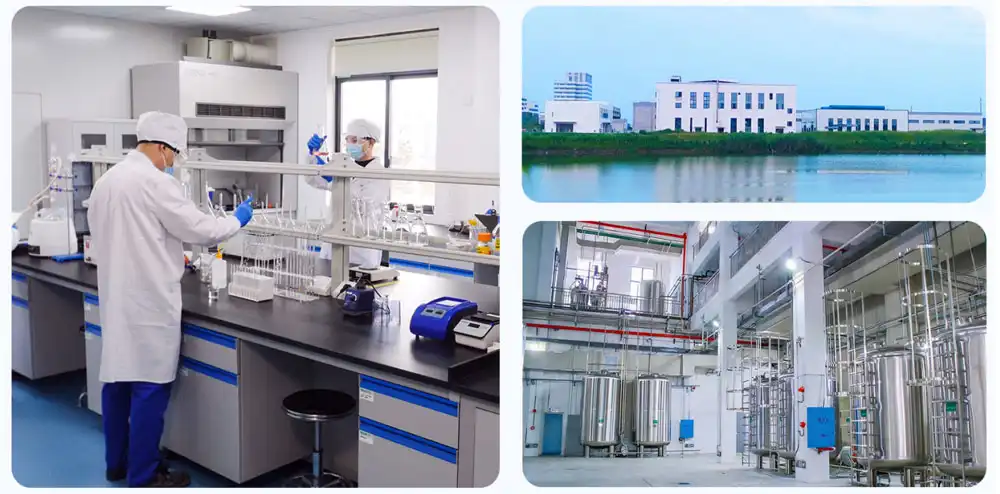
Naturalin Biotech has been making sea buckthorn powder and other plant ingredients since 2006 and has over 40 patents covering methods for extraction and purification. One problem that sea buckthorn powder is known to have is keeping compounds like vitamin C and Omega-7 safe from oxidation while the powder is stored. Their microencapsulation technology directly solves this problem. Their product paperwork meets the strictest legal requirements in the US and Europe, with approvals for USDA Organic, EU Organic, FSSC22000, HALAL, and Kosher.
How to Integrate Sea Buckthorn Fruit Powder into Production Workflows?
It's not enough to just get the element right. Whether its functional properties stay the same during processing depends on how you use it in your production line.
Application Matching by Product Format
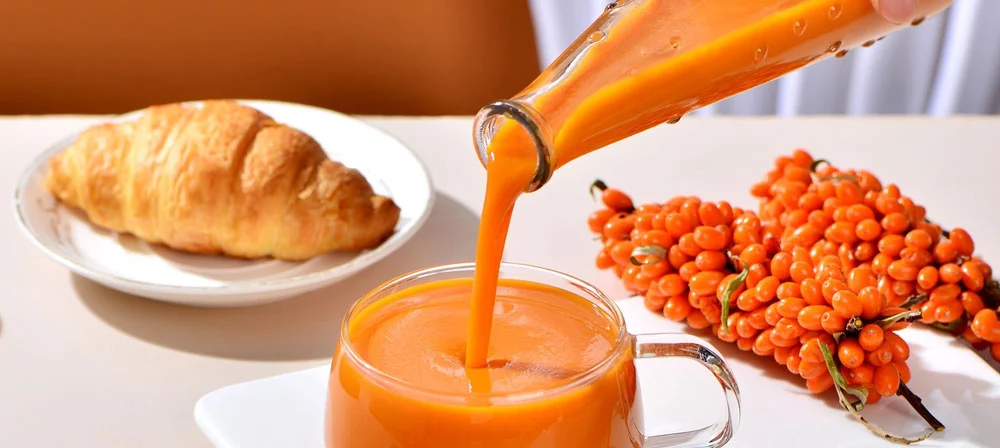
Spray-dried sea buckthorn berry powder doesn't clump when added to healthy drinks, and the color stays the same in acidic pH ranges of 3.0 to 5.0. Freeze-dried powder keeps more vitamin C than supplement capsules and sachets—usually between 1,200 mg and 1,500 mg per 100g—so it's the best choice for claims that it helps the immune system.
Stability Testing Before Scale-Up
Before you start a big production run, you should make sure that the powder works well at the temperatures and humidity that you need for processing by inspecting it for quality and testing its stability quickly. Monitoring for consistency from batch to batch should be put into your deal with your provider and not be seen as an option.
Sustainable Sourcing and Long-Term Partnership
Getting sea buckthorn from growing bases that can be tracked and are managed organically lowers the risk of pesticide residue failures and helps with the clean-label positioning. Suppliers who are in charge of where the raw materials come from, from growing them to handling them, offer better tracking paperwork, which is helpful when regulators want to do full checks of the supply chain.
Conclusion
When looking for a supplier of sea buckthorn powder on an industrial scale, you need to look at more than just price. When deciding where to get goods, things like batch consistency, processing technology, certification coverage, level of customization, and the dependability of logistics all play a role in deciding the quality of the goods and their availability on the market. All of these issues are taken care of by Naturalin Biotech, which has official certifications, processing technology backed by patents, and an active research and development team. A skilled producer with more than 20 years of experience working with botanical ingredients is the best choice for procurement managers who want to lower the risk of buying and speed up product development.
FAQ
What certifications should a reliable supplier hold?
At minimum, look for GMP, ISO 9001, and FSSC22000. If your products target organic retail, USDA Organic and EU Organic documentation are required. HALAL and Kosher certifications open additional market channels.
How does ingredient quality affect formulation stability?
Sea buckthorn fruit powder with inconsistent moisture content or poor encapsulation can degrade during storage, reducing antioxidant potency and altering flavor profiles. Suppliers using microencapsulation technology deliver significantly better stability across a two-year shelf life.
What is a reasonable MOQ for first-time orders?
Reputable B2B suppliers accommodate sample requests and small trial orders before requiring commercial volume commitments. A standard commercial MOQ of 25 kg is reasonable for industrial buyers beginning supplier validation.
How do I verify active compound levels before purchasing?
Request a Certificate of Analysis referencing TLC or HPLC test results. Suppliers who work with third-party labs such as SGS or Eurofins provide independent verification that active ingredients match specifications.
Partner with Naturalin Biotech for Your Sea Buckthorn Powder Supply
Naturalin Biotech has been making plant ingredients for more than 20 years and can help you with your sourcing. We are a supplier of sea buckthorn powder with more than 40 patents, full organic certification, and DDP shipping to the US market. We can help you build your product from a trial sample to a full commercial scale. Today, ask for a free sample or professional advice. You can email us at market@naturalinbio.com or go to naturalinbio.com.
Please note: All products and related services on this website are offered exclusively to corporate clients. We do not accept orders from individual buyers or retail orders.
References
1. Zeb, A. (2004). Chemical and nutritional constituents of sea buckthorn juice. Pakistan Journal of Nutrition, 3(2), 99–106.
2. Beveridge, T., Li, T. S. C., Oomah, B. D., & Smith, A. (1999). Sea buckthorn products: Manufacture and composition. Journal of Agricultural and Food Chemistry, 47(9), 3480–3488.
3. Suryakumar, G., & Gupta, A. (2011). Medicinal and therapeutic potential of sea buckthorn (Hippophae rhamnoides L.). Journal of Ethnopharmacology, 138(2), 268–278.
4. Pundir, S., & Chaudhary, M. (2020). Sea buckthorn berry: A review of bioactive compounds and their functional food applications. Food Reviews International, 37(5), 477–497.
5. Olas, B. (2016). Sea buckthorn as a source of important bioactive compounds in cardiovascular diseases. Food and Chemical Toxicology, 97, 199–204.
6. Grand View Research. (2023). Functional Food Ingredients Market Size, Share & Trends Analysis Report. Grand View Research.