What Is Tomato Extract Powder? Benefits, Uses & How To Make It
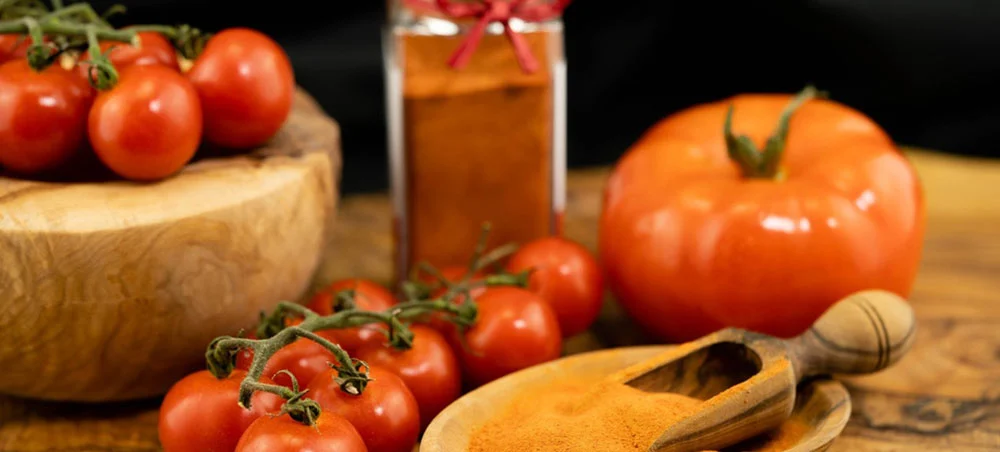
Tomato extract powder is a highly concentrated botanical derivative obtained from Lycopersicon esculentum Mill., processed through advanced extraction and spray-drying technologies to preserve its bioactive compounds. Unlike conventional tomato powder—which is simply dehydrated whole fruit—this extract is standardized for lycopene content, typically ranging from 1% to 10%, verified through HPLC testing. Lycopene, a potent carotenoid antioxidant, remains the primary active marker distinguishing this ingredient in nutritional products, food, and cosmetic applications.This concentrated form addresses critical industry pain points: batch-to-batch variability in raw tomato crops, low bioavailability of fresh lycopene, and the challenge of integrating heat-sensitive phytonutrients into scalable formulations.
Understanding Tomato Extract Powder
What Differentiates Tomato Extract from Other Tomato Derivatives?
The main difference between Tomato Extract Powder and similar goods is how they are processed and how much active chemical they contain. Standard tomato powder keeps the fiber, sugars, and bulk plant material, so it can be used in cooking but not for beneficial doses. Lycopene isolates, on the other hand, are more than 90% pure, but they don't have phytonutrients that work well together, like beta-carotene and phenolic acids. The extract powder keeps the phytochemical profile balanced and has 10–20 times the lycopene density of fresh tomatoes. This gives R&D teams more options for how to make the products. This approach finds a middle ground between cost-effectiveness and functional effectiveness, which is a problem that procurement managers have to deal with.
Key Production Specifications
Naturalin Biotech makes tomato extract standardized to have lycopene levels between 1% and 10%. The levels can be changed to meet the needs of particular formulations. The powder comes in two different particle sizes—60 mesh and 80 mesh—so it can dissolve well in a wide range of situations. In addition to standard specifications, our technical team offers sensory modification to hide the naturally sour taste of lycopene, solubility enhancement for beverage integration, and functional development that is specific to the end-product matrixes. These changes solve the common problem of ingredients not working together during pilot-scale production, where theoretical formulations often fail because of physical interactions that weren't taken into account.
Nutritional and Bioactive Profile
Lycopene is the primary active compound found in Tomato Extract Powder and demonstrates strong antioxidant activity by neutralizing singlet oxygen, providing advantages in lipid-rich environments where polyphenolic antioxidants may have limitations. In addition to lycopene, Tomato Extract Powder contains complementary compounds such as flavonoids, beta-carotene, and vitamin E, creating a comprehensive antioxidant matrix. This synergistic profile helps explain why Tomato Extract Powder may provide broader functional benefits than isolated lycopene in certain applications, particularly in formulations focused on cardiovascular wellness support. Third-party testing from organizations such as SGS and Eurofins confirms that Tomato Extract Powder meets quality expectations by verifying the absence of pesticide residues, heavy metals, and microbial contamination. These quality assurances help Tomato Extract Powder comply with FDA, EU REACH, and FSSC22000 requirements, making it a reliable ingredient choice for professional supplement manufacturers and quality-focused production teams.
Benefits and Uses of Tomato Extract Powder
Health Applications and Mechanism of Action
Clinical evidence supports lycopene's role in maintaining healthy LDL cholesterol balance, contributing to overall cardiovascular wellness. Research has demonstrated that consistent intake of lycopene is associated with maintaining normal inflammatory response markers. Lycopene also accumulates in prostate tissue, where it supports cellular health through its antioxidant properties. These mechanisms explain its utility in wellness products targeting healthy ageing and cellular resilience. Product developers can benefit from knowing that lycopene bioavailability goes up a lot when it is mixed with dietary fats. This is something to think about when choosing a capsule matrix.
Industrial and Cosmetic Applications
The extract is used to make functional drinks in two ways: as a natural colorant that gives the drinks orange-red shades that are in line with clean label rules; and as a functional ingredient that backs up marketing claims about antioxidant content. Because lycopene is sensitive to light, drink makers need to use orange glass containers or UV-protective films. In cosmetics, lycopene helps support skin resilience by modulating matrix metalloproteinase-1 expression, which contributes to maintaining dermal collagen integrity against environmental stressors.Our skincare R&D teams use our oil-soluble extracts to make serums because lipophilic delivery systems help them get deeper into the skin than water-based ones.
Comparative Analysis: Organic Versus Conventional
Organic certification (NOP, EU organic) appeals to consumers seeking pesticide-free ingredients and typically commands a significant price premium over conventional alternatives, reflecting the additional certification and traceability requirements. Our organic tomato bases don't have any synthetic fertilizer leftovers and follow the rules for non-GMO proof. When processing conditions are kept the same, functionally, both organic and conventional extracts show the same level of lycopene stability and bioactivity. Choosing between organic and conventional sourcing is usually based on how the brand wants to be seen, not on technical needs. When buying for natural health stores, organic certification is a must. But when buying for mainstream supplement stores, cost-per-dose economics is often more important.
How to Make Tomato Extract Powder
Traditional Versus Modern Extraction Technologies
The production process of Tomato Extract Powder directly affects ingredient purity, stability, and functional performance. Using ethyl acetate or hexane for conventional solvent extraction can achieve high lycopene recovery rates, but residual solvents require additional purification steps that increase processing costs. Modern supercritical CO2 extraction technology reduces liquid residues while preserving heat-sensitive carotenoids in Tomato Extract Powder; however, the high capital investment required limits its application to premium product categories. A combined extraction approach for Tomato Extract Powder uses enzymatic pre-treatment to break down cellular structures and improve extraction efficiency, followed by controlled-temperature ethanol extraction and vacuum concentration. This processing method helps maintain lycopene in its biologically active trans-isomer form while achieving extraction rates above 85%. For operations managers, understanding the manufacturing technology behind Tomato Extract Powder is essential because processing conditions directly influence storage stability, product quality, and long-term performance.
Spray Drying and Microencapsulation
To turn a liquid concentrate into a powder, precise spray-drying is needed. The particle shape and moisture content are determined by the input temperatures and atomization parameters. If you don't dry something well enough, the residual moisture will help oxidative degradation, and too much heat will change trans-lycopene into less bioavailable cis-forms. Using maltodextrin or modified starch carriers to microencapsulate lycopene shields it from oxidation in the environment, increases its shelf life to 24 months, and makes it easier for automated encapsulation machines to work. Production managers who want to use tomato extract for tableting need to make sure that the bulk density is between 0.45 and 0.60 g/mL so that the dies fill evenly. This is something that our technical documentation covers in detail.
Packaging and Stability Considerations
When lycopene is exposed to sunshine, air, and high temperatures, it breaks down faster. Pharmaceutical-grade metal foil bags that are flushed with nitrogen keep their effectiveness during shipping and storage across continents. Our standard 25 kg packaging has desiccant sachets and double-sealed lids that meet the requirements of ICH stability guideline Q1A. If you buy in bulk, knowing that the rate of degradation doubles for every 10°C rise in temperature can help you plan your warehouse. For the two-year shelf life, climate-controlled storage at 15-20°C with relative humidity below 60% keeps the full strength. Managers in the supply chain like that we can quickly ship from stock, which eliminates the lead-time risks that come with making plant products to order.
Choosing the Right Tomato Extract Powder Supplier
Critical Certification and Compliance Benchmarks
Verification of approval is the first step in evaluating a supplier. ISO 9001 certifies quality management systems, and FSSC22000 uses HACCP principles to deal with food safety risks. These rules must be followed for items that are intended to be used in food. Certifications like HALAL and Kosher make it easier for certain types of customers to buy your products. In addition to certificates, regulatory affairs teams should make sure that suppliers keep allergen control paperwork up to date and can provide regulatory compliance statements for each country. Naturalin has written national business standards for plant extracts in China, which shows that we know how to deal with regulations. This means that foreign buyers can get their goods faster and with fewer problems at customs.
Evaluating Technical Capabilities and Customization
Commodity sources are different from strategic partners because they can't change the mesh size, solubility profile, or formulation support. During the supplier qualification process, you should ask for proof that the particle size distribution is the same across batches. The coefficient of variation should stay below 10%. Find out if the product can remove colors and smells if it's going to be used in nutrition products where visual properties affect compliance. With over 40 patents in extraction technology and 20 years of experience working with nutritional ingredients, we can solve formulation problems that others can't, like making the extract work with pressed candy or making granules that dissolve in water for sachet formats.
MOQ, Pricing Structure, and Supply Chain Transparency
Minimum order numbers show how much it costs to make something. For example, our 25 kg commercial MOQ strikes a good mix between making things cheaply and making them available to new brands. We can give samples and take on small trial orders because we know that research and development cycles need to test things over and over again before they can be scaled up. To get clear prices, ask for thorough quotes that include Incoterms, payment goals, and information on whether the costs of analytical tests are bundled or broken down by item. For the U.S. market, our DDP (Delivered Duty Paid) service makes operations easier by combining freight, customs clearing, and last-mile delivery into a single price quote. Supply chain managers like that we grow rosemary, cactus, and mushrooms on organic farms. This is an example of vertical integration at work, which helps suppliers who depend on volatile raw materials.

Conclusion
Tomato Extract Powder is a widely scalable, scientifically proven ingredient that combines conventional diet with functional health research. Its uniform lycopene content meets the needs for stability in nutraceuticals, functional foods, and cosmetics. Plus, its advanced processing keeps bioactivity that raw materials can't promise. To find the right supplier, you need to look at more than just certifications and prices. You also need to look at technical detail, such as the supplier's ability to adjust sensory profiles, particle traits, and formulation compatibility. As the market for clean-label, plant-based actives with scientific support grows, Tomato Extract Powder is a key ingredient for brands that want to stand out by being honest about their ingredients and using them effectively.
FAQ
How Does Tomato Extract Powder Compare to Fresh Tomatoes in Lycopene Content?
Differences in concentration are big. A 5% standardized extract has 5,000 mg of lycopene per 100 g, which is a thousand times more than fresh tomatoes, which only have 3–5 mg of lycopene per 100 g. This concentration lets supplement pills and functional foods give the right amount of medicine without having to use huge dose sizes.
What Is the Shelf Life Under Commercial Storage Conditions?
When kept in sealed, light-protected containers at 15–25°C with relative humidity below 60%, lycopene can be stored for up to 24 months with less than 10% degradation. Accelerated stability testing at 40°C/75% RH predicts how long the product will last, which helps QA teams set an expiration date.
Are There Significant Differences Between Organic and Conventional Extracts?
When handling standards stay the same, both show the same level of bioactivity in terms of functionality. Organic approval makes sure that synthetic pesticides and GMOs are not present, which is why brands that want to reach natural health outlets can charge more. Conventional extracts meet all safety standards and are the most cost-effective for traditional supplement markets.
Partner with a Trusted Tomato Extract Powder Manufacturer
Naturalin Biotech has been working with botanical extracts for more than 20 years and can help you with your formulation problems. They have their own extraction patents and can make products that are GMP-compliant and get their materials from organic sources. Whether you need standardized lycopene powders for heart health supplements, granules that dissolve in water for functional drinks, or custom taste profiles for beauty uses, our technical team can help you. We also guaranty the quality of our work with HPLC. We make sure that regulations are followed in all global markets by holding ISO9001, FSSC22000, HALAL, and Kosher certifications. Our ready-to-ship product allows lead times of 3–7 working days, and our flexible DDP delivery to the U.S. takes care of all the operations. As an open and honest Tomato Extract Powder provider, we encourage purchasing managers, R&D scientists, and product creators to ask for samples and technical details. Get in touch with our team at market@naturalinbio.com to talk about how our ability to customize and the stability of our supply chain can help you get your product to market faster.
References
1. Clinton, S.K. (1998). Lycopene: Chemistry, Biology, and Implications for Human Health and Disease. Nutrition Reviews, 56(2), 35-51.
2. Erdman, J.W., Ford, N.A., & Lindshield, B.L. (2009). Are the Health Attributes of Lycopene Related to Its Antioxidant Function? Archives of Biochemistry and Biophysics, 483(2), 229-235.
3. Story, E.N., Kopec, R.E., Schwartz, S.J., & Harris, G.K. (2010). An Update on the Health Effects of Tomato Lycopene. Annual Review of Food Science and Technology, 1, 189-210.
4. Rao, A.V. & Agarwal, S. (2000). Role of Antioxidant Lycopene in Cancer and Heart Disease. Journal of the American College of Nutrition, 19(5), 563-569.
5. Unlu, N.Z., Bohn, T., Clinton, S.K., & Schwartz, S.J. (2005). Carotenoid Absorption from Salad and Salsa by Humans Is Enhanced by the Addition of Avocado or Avocado Oil. The Journal of Nutrition, 135(3), 431-436.
6. Stahl, W. & Sies, H. (2003). Antioxidant Activity of Carotenoids. Molecular Aspects of Medicine, 24(6), 345-351.