Phycocyanin Powder for Natural Blue Coloring in Beverage Manufacturing
Phycocyanin Powder is a blue protein pigment that comes from spirulina (Arthrospira platensis). It gives drink makers an alternative to synthetic blue dyes that comes from plants. It gives smoothies, sports drinks, functional drinks, plant-based milks, and powdered mixes colors that range from sky blue to deep sapphire, depending on the grade and dose. It works best when the grade is matched to the pH, heat, and light exposure of the drink, and when the finished drink is tested instead of just water. I explain how it works, how to use it, and how to get it safely in this guide.
Understanding Phycocyanin Powder and Why Beverage Brands Choose It
What Is Phycocyanin Powder?
Phycocyanin is a water soluble pigment-protein complex belonging to the phycobiliprotein family. Spirulina photosynthesis uses light. Grow and harvest the biomass. Wash the biomass. Extract the pigment with water. Filter and concentrate the extract. Dry the extract to a powder. How bright the color is, how soluble it is, how strong it is, how the plant is grown, how it is extracted, how clean it is, how it is dried, what ingredients are holding the color, there are so many things that play into it. Because grades vary from one seller to another, I always recommend reading the spec sheet and the batch certificate of analysis before comparing prices. Our Naturalin Biotech spirulina is the best quality. It has a natural mild smell that can be easily added to most recipes without affecting the taste or texture.
Why Beverage Manufacturers Are Switching to Natural Blue Colorants
People read labels, and these days, many brands would rather use plant-based colorants than man-made ones like FD&C Blue No. 1 (Brilliant Blue FCF). Blue is hard to work with. Scientists who study food have long said that stable natural blue is one of the hardest colors to deliver. That's why spirulina-based pigment got so much attention. Under 21 CFR 73.530, the FDA says that spirulina extract is not required to be certified as a color additive in the United States. The list names specific types of food, such as drink mixes and powders. Before you launch, your regulatory team should make sure that your specific type of drink is allowed.
Why Use Phycocyanin Powder for Beverage Manufacturing?
Phycocyanin Powder can be used in functional drinks, plant-based milks, smoothies, sports drinks, dessert drinks, and powdered mixes. It's easy to spread in most liquid systems because it dissolves in water. Research reviews, like the one by Kuddus and colleagues in 2013, talk about how C-phycocyanin works as an antioxidant. That is just background information for me. It's not a marketing claim, because health or antioxidant claims need to be reviewed by the right authorities in my area and backed up by proof. How well your product sells depends on the pH of the drink, how it was processed, the shade and intensity of color you want, the paperwork you keep, and the rules of your target market.

How Phycocyanin Powder Performs and How to Apply It
Performance in Beverage Formulations
Tests of the water alone don't tell you much. You should check the dispersion, dissolution time, agglomeration, sedimentation, color uniformity, flavor impact, and mouthfeel of every system you want to sell because performance depends on the whole beverage matrix. That includes protein shakes, clear drinks, carbonated drinks, drinks with a lot of solids, and dry mixes. Published research on stability, such as that by Chaiklahan and colleagues in 2012, shows that colors stay true best near pH 5.5 to 6.0. As temperatures rise above about 45°C, colors fade faster. Oxygen and light also fade the color. Copy your real step of pasteurization or hot-filling, the clarity of the packaging, the amount of oxygen in the headspace, and the time of storage. Then, use instruments and visual standards to keep track of color.
Dosage and Dispersion in Production
No one dose works for everyone. The level of use is based on the color value of the grade, the shade you want, the beverage base, processing, and the rules in your area. Start with small tests in the lab to find the lowest dose that works for your shade. Then, confirm it at both the pilot and production levels. Since higher E-value grades give you more color per gram, you usually don't need as much powder. A useful method is to measure out the powder, mix it with a small amount of cool, compatible liquid or premix, and then slowly add it while stirring it in. If your process lets you, add it after the heat step. Make sure it works with other colors, flavors, acids, minerals, proteins, sweeteners, and gums.
Phycocyanin Powder vs. Other Blue Color Solutions
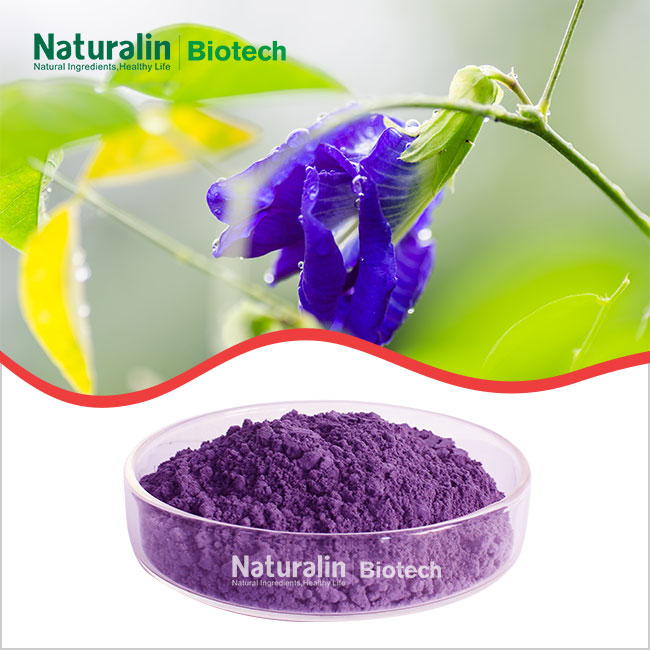
Blue spirulina powder usually refers to a spirulina product that has a lot of phycocyanin in it. Products can be very different in terms of their concentration, color, solubility, protein content, and how they were processed. Most of the time, synthetic blues like Brilliant Blue FCF can handle heat, light, and acid better. Phycocyanin helps you position things based on plants, but you need to be more careful with pH, heat, light, and oxygen. We also sell butterfly pea flower extract, which is another plant-based choice. Anthocyanins give it its color, so its shade changes when the pH changes. Every choice has to follow two rules. Organic claims need to be backed up by real certification, and "natural" does not mean "organic." You can't use cosmetic-grade materials in place of food-grade materials.
Naturalin Biotech Phycocyanin Powder: Grades, Customization, and Quality
E6 to E40 Grades and Product Specifications
There are five grades of Phycocyanin Powder that we sell: E6, E10, E18, E25, and E40. The E value shows the color value, and UV-VIS is used to test it. The better grades have more color per gram, while the worse grades are better for lighter shades. It comes in powder form, has an 80 mesh, 60 mesh, or custom mesh size, and has a shelf life of 2 years. Natural colors, dietary supplements, functional drinks, health foods, and cosmetics are all common uses. We have stock on hand, and the usual lead time is three to seven business days. You should try out different grades to find the best one for your base, pH, and process.
Customization and Formulation Support
We change the product to fit the needs of each drink. Our products come in various forms such as powders, granules, liquids, etc. We can change the taste, how well it dissolves, how it works, and how it is made. Our research and development team has over 40 patents for all of our product lines. They work with technologies such as microencapsulation, water solubility and dispersibility, and polysaccharide purification. Projects are done in a clear order: communicate needs, check if solution will work, design it, do experimental research and development, make sure the process works, mass production, and follow up with customers after the sale. You can always track the progress and we will answer any questions you have within 24 hours. Make a lot of OEM and ODM service from the formula.
Certifications and Quality Control
Buyers first want proof, so this is what we give them. There are EU, NOP, ISO 9001, FSSC 22000, HALAL, and Kosher certificates for our Phycocyanin Powder. The workshops where we work are GMP-compliant, and our lab follows HACCP and GMP rules for HPLC, TLC, UV, and AAS testing. We also work with outside labs like NSF, SGS, and Eurofins on a long-term basis and send products to them on a regular basis. Bio-Resources, our parent company, was founded in 2006 and got ISO and HACCP quality system certification in 2008. You can get a video or in-person inspection of the factory. We will give these certificates to your QA team after you tell us which ones are best for your target market.
Sourcing Phycocyanin Powder for Bulk Beverage Production
How to Choose a Phycocyanin Powder Supplier
Write down what you need. The product’s use, the market you want to reach, the yearly output, the packaging, the certificates, and how it will be delivered. You can then compare suppliers on the same tests: color value, moisture, protein, solubility, microbiological limits, heavy metals, shelf life and storage conditions. A reliable supplier will provide certificates of analysis for each batch, product specifications, food safety certificates, traceability, help with exporting and representative samples. All of size, lead time, minimum order quantity and technical support are very important. Price needs context. A grade with twice the color value may only require half the amount of powder to make the same shade, even if it costs more per kg. See what each color is going for.
A Practical Procurement Checklist for Bulk Orders
Here is a short list that helps make sure that R&D, QA, and purchasing all work together.
-
Product requirements: Confirm food-grade status, grade, UV-VIS color value, solubility, moisture, microbial limits, contaminant data, allergen status, non-GMO declarations, organic status if you plan to claim it, shelf life, and storage conditions. Put every item into a specification sheet that you and the supplier both approve before ordering, so nothing is left to interpretation.
-
Supplier qualification: Verify who actually makes the product, then review quality certificates, production capacity, batch consistency, certificate-of-analysis availability, export experience, OEM capability, and how quickly the team answers technical questions. A video or on-site audit adds confidence before you commit to a commercial volume. Ask for sample lots from more than one batch.
-
Trial documentation: Record target pH, processing temperature, dosage, mixing method, packaging type, color standard, and results from both accelerated and real-time stability studies. Those records let you repeat the result at scale and defend your choice during audits. They also give your team a baseline for every future lot.
With these checks, technical, regulatory, and supply risk is cut off early.
Working With a Phycocyanin Manufacturer or OEM Partner
Buying directly from manufacturers usually gives you more control over specifications, batch consistency, technical support, bulk pricing and long term planning. Buyers needing very small quantities or local stock can use distributors. We work directly with companies that manufacture drinks, supplements and contract goods. There are samples available or you can order a small test order, the commercial minimum is 25 kg. Shipping by DHL, FedEx, sea, air & land. * We don’t handle customs steps for US customers. Please take note. We do DDP door-to-door delivery instead. For private-label projects, let us know your short early. This should include the requirements, the packaging format, the brand, lead time, documents and your regulatory responsibilities. We deal with businesses, not people.

Quality, Safety, and Smart Buying Decisions
Quality, Safety, and Storage Requirements
The quality of the product, how it is to be used, the dose, how to keep it from getting contaminated, and the rules of the market where it will be sold determine the safety and whether the product is suitable or not. Before you sign off, get food grade documentation, batch test results, allergen, microbiological and heavy metal data and product shelf life information. Don’t make health or medical claims that can’t be substantiated. Keep coloring for drinks away from concentrated supplement use. Keep powder dry. Keep away from water, oxygen and heat. Store sealed in a cool, dry, dark place. Barrier packaging, lot control and first-in, first-out inventory handling ensure color performance is secure. Our shelf life is two years, as listed.
Common Mistakes to Avoid
I keep repeating the same mistakes. Some buyers only look at price without comparing the value of color. Others don’t even bother to fill out the paperwork, they mix cosmetic-grade powder with food or drinks or assume that all phycocyanin products are stable. Another common mistake is to approve a recipe after testing it only with water. These habits can lead to color differences, higher costs, failed shelf-life testing and regulatory compliance issues. To avoid these pitfalls, look at the true cost of color, get samples from typical batches, test the whole beverage, and review the natural color regulations for your market. Natural is not always good for every product or situation.
Final Decision Guide for Selecting the Right Grade
First match grade with drink. If you want a lot of color in a small space, a grade with a higher color value may work best. Solubility becomes more important for applications where dispersion is important, i.e. clear drinks and powdered mixes. Products that are acidic, hot or exposed to light will need proof of stability for that use. Then find a supplier that is compatible with how you want to buy, whether it’s in bulk, to your exact specifications, in OEM packaging or in small trial quantities. There is a low risk path from paper and sample to lab test, pilot test and controlled commercial order. So your schedule, your budget and your brand are all protected on that path.
Conclusion
Phycocyanin Powder helps beverage makers meet clean label requirements by adding a blue color that comes from plants. However, it works best when the grade matches the drink. The evidence we've looked at here shows that pH, heat, light, oxygen, and the whole drink matrix affect how long colors last. This information must come from lab, pilot, and production trials. More color is packed into each gram of higher E-value grades, so the real cost depends on the color value rather than the price per kilogram. Batch certificates, food-grade paperwork, traceability, certifications, and testing are all things that show how good a supplier is. The pigment stays safe when kept in a cool, dry, dark place. Common mistakes, like testing with only water or cosmetic-grade materials, lead to failures that could have been avoided. Technical and regulatory risk are lower with a staged approval process.
FAQ
What is Phycocyanin Powder used for in beverages?
It naturally turns drinks blue. Smoothies, sports drinks, functional drinks, plant-based milks, and powdered mixes are all common ways to use it.
Is there a standard dosage?
No, the dosage depends on the grade, the color you want, the base drink, and how it is processed. You should do lab and pilot tests to find the lowest level that still works.
Does it hold color in acidic beverages?
If the drink is very acidic, very hot, or gets a lot of light, it may fade. Before anyone says yes, test your exact pH, process, and packaging.
How should I store it?
Keep it closed up in a cool, dry, dark place that isn't near water, oxygen, or heat. The shelf life we list is two years.
Which documents should I request?
Ask for the specification sheet, the batch certificate of analysis, and any certificates that are needed for your market, like EU, NOP, ISO 9001, FSSC 22000, HALAL, or Kosher.
Do you offer samples and OEM support?
Yes. We offer OEM/ODM services, samples, and small trial orders. Orders for business use begin at 25 kg.
Request a Phycocyanin Powder Sample or Bulk Quote
Naturalin Biotech sells Phycocyanin Powder in grades E6, E10, E18, E25, and E40. They offer samples, small trial orders, and a commercial minimum order quantity (MOQ) of 25 kg. Lead times are 3–7 working days. Send an email to market@naturalinbio.com with your beverage type, pH, processing conditions, and target market if you are looking for a Phycocyanin Powder supplier. It takes us 24 hours to answer, and we only work with businesses. For more information, go to naturalinbio.com.
Please note: All products and related services on this website are offered exclusively to corporate clients. We do not accept orders from individual buyers or retail orders.
References
1. Annual Review of Food Science and Technology, 2017 – Natural Colorants: Food Colorants from Natural Sources.
2. Process Biochemistry, 2012 – Stability of Phycocyanin Extracted from Spirulina sp.: Influence of Temperature, pH and Preservatives.
3. Processes, 2020 – Thermal Stability Improvement of Blue Colorant C-Phycocyanin from Spirulina platensis for Food Industry Applications.
4. BioMed Research International, 2013 – Recent Developments in Production and Biotechnological Applications of C-Phycocyanin.
5. Federal Register, 2013 – Listing of Color Additives Exempt From Certification; Spirulina Extract.
6. Code of Federal Regulations, Title 21, Section 73.530, 2024 – Spirulina Extract.