Organic Green Tea Powder for Matcha Blends and Functional Beverage Manufacturing
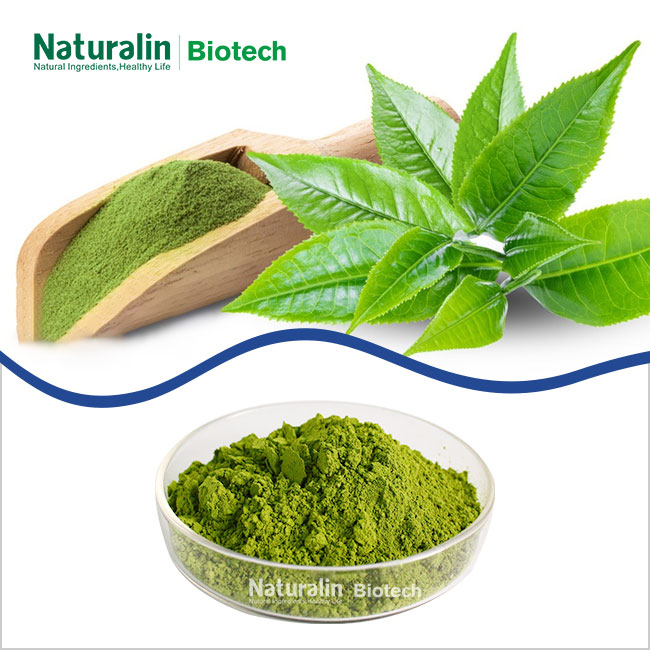
Organic Green Tea Powder is made from organically grown tea leaves which have been ground into a very fine powder. It adds natural green color, tea flavor and plant-based polyphenols to matcha blends and functional drinks. The word organic alone doesn’t make a difference, the right choice depends on particle size, color, caffeine content, dispersibility, and proof. You'll learn how to compare suppliers, the difference between green tea powder and matcha, and what specs are important for beverage work. I also discuss how Naturalin Biotech helps manufacturers by providing them with samples, test results, customization options, and delivery within the U.S.
Why Organic Green Tea Powder Matters and How It Differs from Matcha
What "Organic" Means for Manufacturers
“Organic” means the leaf is grown and processed organically for the buyer. The particle size, taste and caffeine remain the same. These are characteristics of the tea itself, and of the way it was milled. In the U.S., a product sold as organic has to meet the standards of the USDA National Organic Program. They must also have valid certification from a recognized body for the imported organic ingredients. “Grades are different, too. Ceremonial grade is best for drinking with water straight. Premium, culinary grade are great for smoothies, baked goods and lattes. Industrial grade is best for large scale blends where cost and consistency are most important. Each grade has its place, so start with your application and what you want to pay. Then ask the supplier to match the grade to the use. Also, bring up certification, traceability and packaging options in the first conversation too.
Green Tea Powder vs. Matcha
Both powders look the same, but they are made in different ways. Tencha is a leaf that is grown in the shade for a few weeks before it is picked for traditional matcha. One study from 2020 in Molecules says that shading increases chlorophyll and L-theanine, which is what gives matcha its darker green color and fuller taste. There are some green tea powders that are made from leaves that haven't been shaded, which makes them taste and look more bitter and olive. That's not a mistake. A food-grade green tea powder can add a tea note to a protein shake or a baking mix for less money. Shaded matcha is usually worth the extra money in a premium latte. Match the powder to your sensory goal, and then use samples to make sure.
Origin, Format, and Product Fit
People who are buying organic green tea powder from Japan or China often ask which country of origin is more important. Origin means where the tea is grown, but it doesn't mean that it is good. When you look at organic green tea powder, the certificates, lab test reports, samples, and consistency from batch to batch tell you a lot more about how good the product is. It's also important to format well. Tea bags used to hold cut leaves, and the cup held the tea bag. The person who drinks the tea only gets what the water takes out. Organic green tea powder, on the other hand, is made by grinding the whole tea leaf into a fine powder that is then added directly to the drink. This process includes the leaf's color, fiber, and other natural parts. Of course, this means that organic green tea powder is great for making RTD drinks, nutrition powders, supplements, concentrates, and baked goods. When buying organic green tea powder in bulk, it's important to know about particle size, color, solubility, and overall quality because the whole leaf is eaten, not just the water-soluble parts. To make sure that every batch of organic green tea powder meets their needs, buyers should also look at the heavy metal test results, microbial limits, and organic certification.

Benefits, Nutrition, and Performance of Organic Green Tea Powder in Beverages
Nutrition and Functional Compounds
Whole-leaf powder adds caffeine, chlorophyll, catechins, polyphenols, L-theanine, and other leaf parts to the final product. As per a review published in Preventive Medicine in 1992, green tea leaves can hold up to 30% polyphenols by dry weight. EGCG is the most common catechin that was found. As the cultivar, harvest, processing, and test method change, so don't ask for textbook numbers but for current lab results. We know that the whole-leaf powder has more than 15% total catechins and between 2% and 4% natural caffeine. Through CO2 extraction, you can get a version that doesn't have any caffeine. You should also pay attention to safety. In 2018, the EFSA said that some studies with EGCG doses of 800 mg or more per day from supplements showed that liver enzymes went up. This means that planning doses should be part of your formulation work.
What Drives Performance in Matcha Blends and Functional Beverages
You can't just look at a powder's color and guess how it will act in a drink. How the consumer feels is affected by particle size, smell, bitterness, astringency, dispersibility, and sedimentation. The size of our powder is between 200 and 1000 mesh. A finer grade, 800 mesh and up, feels like it's almost dissolved in your mouth, but it's still just a mix of leaf particles and not an extract that dissolves in water. Clear drinks, like smoothies and milk-based blends, hide haze or settling better than opaque drinks, like drinks that are cloudy or mixed with milk. Color can also change with the harvest season because natural levels of chlorophyll change. This is why lots in the spring and fall can look different. When it comes to B2B projects, we can match colors. Light, heat, and acid can turn green to olive, so test your real formula to see how well the color stays true.
Processing Steps and Pilot Trials
Before you lock the formula, plan the steps. Adding a sugar, gum, or protein carrier to a small amount of liquid before adding the powder helps keep it from clumping when it's wet. Homogenization can make the suspension better, but filtration might get rid of fine solids that you want to keep. Make sure you check both. A study published in 2006 in the Journal of Agricultural and Food Chemistry found that catechins tend to be more stable in acidic environments and break down when the pH level rises. In other words, pH and heat treatment will change the antioxidants and flavor. Most important for baking are the temperature and amount of moisture in baked goods like sweets, bars, sauces, and dry mixes. Test your final commercial formula on a small group of people and keep an eye on the taste, color, dispersion, sedimentation, and shelf life.
How to Choose High-Quality Organic Green Tea Powder and Avoid Common Risks
Documents to Request
Getting the right paperwork is the first thing that you need to do to buy organic green tea powder. You should get a valid organic certificate that lists the exact product, facility, and processing activity before you place an order. You should also get a Certificate of Analysis (COA) for each lot of organic green tea powder. The Strengthening Organic Enforcement rule from the USDA says that organic imports must have NOP import certificates by March 2024. Make sure that both the company that sells you organic green tea powder and the person who is bringing the goods in know how to handle organic products properly and meet the necessary standards. To make sure the organic green tea powder is safe and legal, you should also ask for test reports for heavy metals, microbiology, allergens, pesticide residues, and GMOs. Testing by a third party adds to the confidence in the quality and consistency of the product. At Naturalin Biotech, our QC team checks organic green tea powder and other plant-based ingredients using HPLC, TLC, UV, and AAS testing tools that we keep on hand. We also send products to NSF, SGS, and Eurofins on a regular basis for testing by outside groups. Under FSMA, it is also the U.S. importer's job to check the credentials of foreign suppliers. When you start looking for organic green tea powder, make sure your QA team has all the necessary certificates and testing records as soon as possible.
Specifications That Matter
A sheet of specs should have more than just color names on it. Check the type of plant, where it came from, how it was harvested, the grade, the way it was processed, the particle size, the moisture level, the ash, the caffeine, the polyphenols, and the catechins. The data we have on powder shows that the particles are between 200 and 1000 mesh and the moisture level is below 5%. This keeps microbes from growing. As important as the number is the way it was calculated, so ask the supplier if they used HPLC to measure catechins and UV to measure polyphenols. Also, look for foreign matter in the controls. If your product has a caffeine limit, a value from a known method will protect you when you're making the label. Then put each sample through its paces in your real food or drink recipe and rate its color, taste, spread, sedimentation, and aftertaste.
Common Sourcing Risks
Most problems can be traced back to a short list of reasons: organic claims without matching certificates, color or flavor that doesn't match, wrong caffeine data, bad packaging, and bad storage. Buying based only on price or bright color doesn't always work out. The total cost can go up because of rework, returns, and reformulation for a cheap powder that doesn't mix well, tastes bitter, or has a lot of sediment. When green tea powder is shipped and stored for a long time, oxygen, light, heat, and moisture break it down, which dulls its color and flavor. Labeling also comes with risks, since health claims have to follow U.S. law and claims about caffeine have to be true. Check each claim against a document and decide what lots will be accepted before the first order ships.
Comparing Suppliers, Bulk Purchasing, and Packaging for Organic Green Tea Powder
Manufacturer, Distributor, or Trading Partner
It is contingent upon the amount of orders you have, where you want to deliver and your technical needs. Usually, a direct manufacturer will give you more control over specs, customization and bulk pricing. Distributors can keep stock locally, and sell smaller quantities, which is good for test runs and orders with more than one ingredient. When you audit a factory, you need to check its production capacity, milling equipment, hygiene systems, segregation of materials, traceability, warehouse conditions, experience with exporting, and quality management. Learn more about private-label services, custom blends, labeling and OEM support. These things will impact when you can launch your product. You can see these things clearly when you watch a video or check it out in person. In most cases you can schedule your day with a supplier who is ready to be audited and who will give you documents to back up your answers.
What We Offer at Naturalin Biotech
Naturalin Biotech was established in 2017 as a branch factory of Naturalin Bio-Resources which was established in 2006. We provide natural ingredients in powder, granule and oil form and our team adjusts the concentration and formulation for each use. We are GMP, ISO 9001, FSSC 22000 certified and also certified for both halal and kosher. Organic certification is also a possibility. In case a powder has to perform within a beverage, our R&D department can help you with microencapsulation, water solubility and dispersibility technology. The company has more than 40 patents covering its range of products. It produces more than 1,000 tons of natural ingredients each year. First, we clarify the needs and assess whether the idea can even be realized. Then it moves on to experimental research and development, process verification, mass production and post-sale follow-up.
Packaging, Storage, and Shipping to the U.S.
The way organic green tea powder is packed is a big part of keeping it fresh and protecting its taste, color, and overall quality. Light, oxygen, heat, and smells in the air can all ruin the quality of organic green tea powder. To keep it safe from these things, you should use food-grade drums, inner liners, or aluminum-lined bags. We keep our organic green tea powder below 20°C and use nitrogen flushing to keep it from getting too much oxygen and light. Since it is being stored this way, the item can last up to 24 months. When buying organic green tea powder in bulk, you should ask suppliers about sample packs, 1-kilogram packaging formats, cartons, and other bulk packaging options. This is because the order volume affects the minimum order quantity (MOQ), the planning of production, and the lead time. In most cases, Naturalin needs three to seven business days to get your order, and we answer all questions within twenty-four hours. We also offer DDP door-to-door delivery in the U.S. by sea, land, or air for people who want to buy organic green tea powder. This means that we handle customs clearance as part of the delivery arrangement. To make it easier to buy organic green tea powder in the future, you should also keep and organize certificates of origin, insurance papers, and paperwork for repeat orders.

A Practical Procurement Process for Organic Green Tea Powder Buyers
Write a Purchasing Brief
Start with a one-page brief that asks the same questions of each supplier. Include the use, desired grade, preferred origin, the need for organic certification, particle size, color, flavor, caffeine range, packaging, annual volume, testing needs, and delivery market. You need to say whether the powder is for resale, internal manufacturing, private label, or OEM production. This will affect the paperwork and labels that need to be made. Once you give the supplier a clear brief, they can quickly make a sample because they can match a grade to your needs on the first try. When you send it to Naturalin Biotech, our team checks to see if it's possible and can suggest changes to the concentration, particle size, or format before we start working on the samples. This way, you don't have to wait longer than necessary.
Score Suppliers on Total Cost
A weighted scorecard ensures the choice is fair. Rate each supplier on their certification, safety testing, sensory results, consistency of lots, price, minimum order quantity (MOQ), lead time, customization, communication, and ability to take corrective action. Concentrate on what could most hurt your product, such as safety data with supplements or color with premium blends. Then consider the total cost of ownership, not just the unit price. Add in the shipping, testing, storing, throwing away and making of new batches. A powder that costs less per kilo but requires a heavier stabilizer system or spoils batches could end up costing more to purchase. Distribute the scorecard results to production, QA, R&D and purchasing so that all are in agreement prior to approval.
Run Samples and Pilot Trials
Slowly move from shortlist to approval. Ask each finalist for samples, specifications, COAs, organic paperwork, safety reports and how the products will be packaged. Then try out your real formula with samples for taste, color, degree of dispersion, degree of settling, processability, caffeine and shelf life. If the sample results meet the requirements, a pilot order should be placed. Long-term supply approval only after consistency of pilot lots is demonstrated. Naturalin Biotech can assist you by supplying samples, performing in-house HPLC testing, obtaining third-party approvals and keeping your R&D and QA teams fully informed with transparent progress reports at every stage of the process. Keep track of repeat orders to ensure that future batches are consistent with the standard.
Conclusion
The best organic green tea powder for matcha blends and functional beverages is based on the grade selected for its use, not color or price. Food-grade powders can be used in smoothies, baked goods and nutrition mixes, whereas shaded tencha matcha is best for high-end drinks. Formulation is based on lab data, particle size, moisture and dispersion tests because of the variation in catechins, caffeine and color from lot to lot. For organic claims, you need certificates for the product and the facility. You need the right paperwork for U.S. imports. Packaging which excludes moisture, oxygen, light and heat increases shelf life. A written brief, weighted scorecard, total cost comparison and pilot tests with the final formula help mitigate the risk of technical and supply issues before long-term use is approved.
FAQ
Is Organic Green Tea Powder the same as matcha?
No, matcha is made from tencha that has been shaded. Other green tea powders may use leaves that have been processed without shading. You can use either one in drinks, so pick one based on your taste, color, and budget.
Why does caffeine content vary?
Caramel color, harvest time, leaf age, and processing all have an effect on caffeine. Our natural powder is usually between 2 and 4%, and we also offer a decaffeinated version that is made by CO2 extraction. Find out about lots.
What documents should I request?
Ask for the organic certificate, the specification sheet, the Certificate of Analysis, reports on heavy metals and pesticides, microbiological results, allergen and GMO statements, and information on how long the food will last.
Do you support private-label or OEM projects?
Yes. We make solutions for concentration, format, and application that fit your needs. Tell us what you want the formula to do and how you want it packaged, and our team will look it over.
Request an Organic Green Tea Powder Sample from Naturalin Biotech
For matcha blends or healthy drinks, are you looking for an Organic Green Tea Powder supplier? Naturalin Biotech has powder that has been tested for HPLC, can be customized, is made in a way that is GMP and ISO 9001 certified, and can be sent to the U.S. by DDP. To get a sample, specification sheet, or wholesale quote, email market@naturalinbio.com with your needs for use, quantity, and packaging. You can find out more at naturalinbio.com as well.
Please note: All products and related services on this website are offered exclusively to corporate clients. We do not accept orders from individual buyers or retail orders.
References
1. Preventive Medicine (1992): Green Tea Composition, Consumption, and Polyphenol Chemistry
2. Life Sciences (2007): Tea Polyphenols for Health Promotion
3. Journal of Agricultural and Food Chemistry (2006): Kinetic Study of the Thermal Stability of Tea Catechins in Aqueous Systems
4. EFSA Journal (2018): Scientific Opinion on the Safety of Green Tea Catechins
5. Molecules (2020): Health Benefits and Chemical Composition of Matcha Green Tea: A Review
6. Federal Register (2023): National Organic Program; Strengthening Organic Enforcement