Which Maitake Mushroom Extract Powder Grade Fits Standardized Food Ingredient Production?
The best grade of maitake mushroom extract powder for making standard food ingredients is a water or dual extract with clear specifications for polysaccharides and beta-glucans, a named test method, and documentation for each batch. It works well in simple blends, but the concentration is lower and you can't control the dose as well. We offer Grifola frondosa extract that has been tested using the enzyme solution-UV method and found to have 30% polysaccharides and 20–40% beta-glucan. Still, the right grade depends on whether you're making a capsule, a drink, or a premix. This guide tells you how to make sure that the supply terms, compliance, and specifications meet your needs for production.
Maitake Mushroom Extract Powder vs. Whole Maitake Powder: Start With the Product Definition
What Separates an Extract From a Milled Mushroom
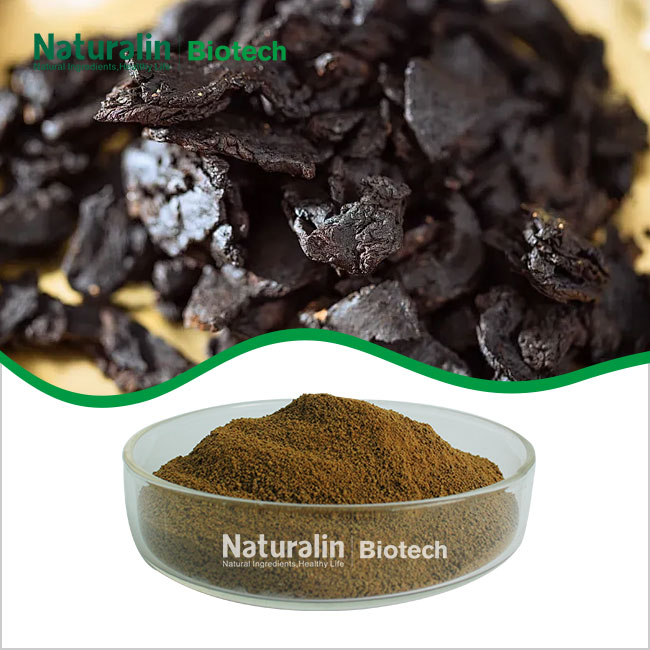
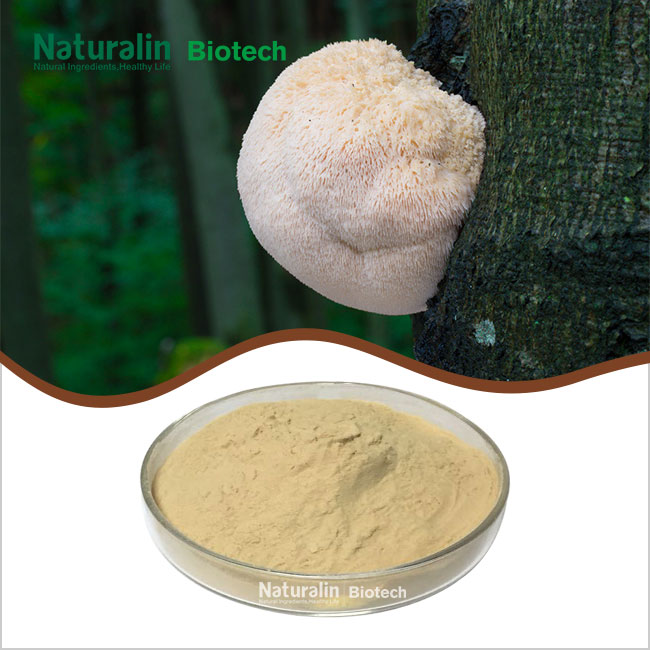
Ground Grifola frondosa that has been dried out is what whole maitake powder is made of. There is still the natural mix of fiber, protein, and chitin, but the active polysaccharides are less strong because of all the other stuff. An extract does something different. Manufacturers use hot water and sometimes ethanol to pull out certain compounds. They then concentrate and dry the liquid to make a powder. It has more polysaccharide per gram, which means that less of it gives the same effect. A review published in 2009 in Nutrition Reviews says that beta-glucans are cell wall polysaccharides of higher fungi. This is why they are concentrated through extraction.
Fruiting Body, Mycelium, and Why the Source Must Be Named
A certain active profile is not guaranteed by the species of mushrooms alone. What is used, how it grows, and how it is extracted all change the outcome. The visible mushroom is the fruiting body, which many buyers like because it makes it easy to tell where the mushroom came from. The root-like network is called mycelium, and it is usually grown on grain. This is why some buyers ask for alpha-glucan testing: mycelium grown on grain can pick up leftover starch from the substrate. The label and test results are easier to read because our maitake extract doesn't have any mycelium, fillers, or additives in it. I think you should ask each supplier to write down the source part.
Why "Grade" Means Little Without a Specification
There isn't a single trade grade for maitake extract. What one supplier means by "premium" could be a different level of polysaccharides, a different method, or a different carrier. There are also different ways to measure total polysaccharides and beta-glucan, so the numbers can't be switched around. I think you should ask for four things before you ask for a quote: the marker compound, the test method, the guaranteed range, and a recent batch COA. Those four make it possible to compare two quotes. Even if the price per kilogram is lower, the active content may be lower if it is not there. There is a lot of time saved in this step during supplier qualification.
Maitake Extract Powder Grades Compared: Water Extract, Dual Extract, Fruiting Body, and Mycelium
Standardized Water Extract for Beverages and Soluble Foods
For soluble applications, hot water extraction is one of the most common methods because beta-glucans and other polysaccharides dissolve in hot water, allowing the process to focus on these water-soluble components. Maitake mushroom extract powder produced through this method is also easier to evaluate in water-based formulations. Buyers often consider this grade for protein shakes, wellness teas, and mushroom coffee. However, even if the powder dissolves well in a laboratory beaker, its performance may differ in beverages with high acidity or protein content. Therefore, it is important to test dispersion, sedimentation, and taste in the final product. Naturalin offers water extraction and can adjust its technologies for water solubility and dispersibility to meet the specific requirements of different projects.
Dual Extract for a Broader Compound Profile
When you use hot water and alcohol together, which is called dual extraction, you can get compounds that water alone leaves behind. Some buyers pick it when a bigger picture backs up the product story. There are real trade-offs. For the destination market, residual solvent testing may be needed, which means that sensory properties may change and more paperwork needs to be done. When profile is more important than taste, dual extract can work well in capsules, tablets, and powder blends. Naturalin offers both water extraction and dual extraction, so you can get quotes from more than one supplier for either method based on your specific needs. You can then test them side by side to see which works best.
Fruiting Body, Mycelium, and Organic Options Compared
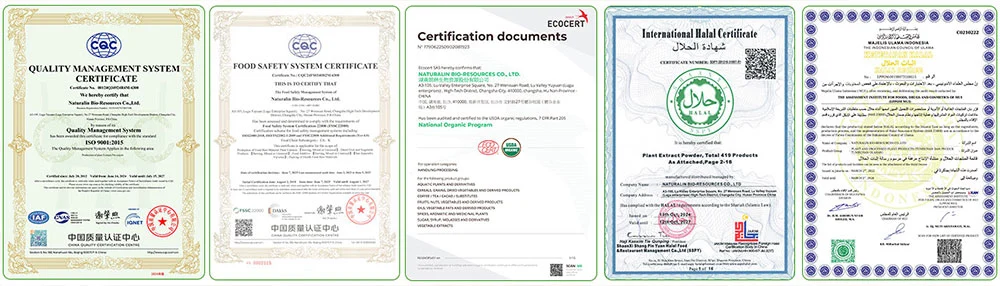
Fruiting body extracts help with premium positioning and making the source of the product clear. Mycelium-based ingredients might be cheaper or easier to get, but their labels and active-compound data are different, so comparing them just by price or extract ratio isn't a good idea. For organic grades, there is an extra step: the certificate has to cover the whole supply chain. In the US, the USDA National Organic Program sets the rules. Naturalin can certify its products as organic by the EU and USDA, as well as HALAL, Kosher, ISO9001, and FSSC22000. Maitake should also not be mixed with other mushroom extracts, like reishi, because each has its own unique compounds and rules.
How to Select the Right Grade for Your Production Scenario
Capsules, Tablets, and Powder Blends
The strength, low moisture, flowability, and particle size of dry dosage forms all play a role. When it comes to filling machines, moisture affects caking and flow, and particle size affects how uniform the blend is and how much it compresses. We offer 80 mesh maitake extract, but formulators can also get it in 60 mesh or a custom particle size, so the powder can work with their machines. In multi-mushroom products, the powder can also be mixed with other useful mushrooms like reishi, lion's mane, and cordyceps. When making a new formula, I suggest doing a small pilot blend first before giving the go-ahead for the bulk specification. This is because the flow changes as more ingredients are added.
Functional Beverages and Food Premixes
People who make drinks need ingredients that mix quickly, resist settling, and deliver the right flavor for each recipe. Maitake mushroom extract powder can be evaluated for use in different beverage and food formulations, as heat, acidity, protein, minerals, fiber, and sweeteners in food premixes may affect its performance. In practice, the best approach is to conduct a bench test using the actual formulation, followed by a pilot run and a stability assessment over the intended shelf life. Naturalin's mushroom extracts are suitable for exploring applications in mushroom coffee, functional teas, protein shakes, and nutrition bars. If a standard powder does not meet the formulation requirements, Naturalin offers functional and formulation development services to adjust the ingredient's form, solubility, and dispersibility, including the development of granules or liquid formats. Sharing your base recipe early in the process can also help reduce the number of sample testing rounds.
Calculating Cost Per Active Dose, Not Per Kilogram
It is possible for a price that is lower per kilogram to cost more per serving. To get the same dose, you need more of extract A if it has less active ingredient than extract B. How to figure it out? Just divide the price per kilogram by the number of finished servings or the grams of beta-glucan or polysaccharide in that kilogram. After that, add the cost of testing, shipping, and batches that are turned down. Naturalin's commercial minimum order quantity is 25 kg, but you can get samples or place small trial orders to see how well it works before committing to a large order. It's also cheaper to hold extra inventory when there is ready stock and a typical lead time of 3–7 working days.
Quality, Safety, and Documentation Requirements for U.S. Buyers
Reading a Batch COA and Test Method
A COA records one batch, while a specification sheet explains the goal. Check the type, appearance, moisture level, particle size, polysaccharide and beta-glucan content, microbiology, and contaminants. Make sure that the report has the test method on it. The enzyme solution-UV method is used by Naturalin to test maitake extract, and our lab uses HPLC, TLC, UV, and AAS instruments in line with GMP and HACCP rules. You can only compare values when two suppliers use the same method. If they don't, you could end up with different numbers for the same material. If you ask for two or three recent COAs instead of just one, you can see how much variation there is from batch to batch.
Contaminant Testing, Third-Party Verification, and Certificates
You might need tests for heavy metals, pesticides, residual solvents, and aflatoxin, depending on the product, the market it's going to, and the standards of your customers. In the US, companies that make dietary supplements have to follow the FDA's 21 CFR Part 111, which says that ingredients must meet certain requirements and have their identities checked. This means that paperwork from your supplier directly backs up your own records. Naturalin often sends its products to outside labs like NSF, SGS, and Eurofins to be tested. We have ISO9001, FSSC22000, HALAL, and Kosher certifications, as well as EU and USDA organic certifications. Our workshops follow GMP guidelines. Get copies that are up-to-date and check each one's scope and expiration date.
Shelf Life, Packaging, and Shipping to the U.S.
The shelf life of maitake mushroom extract powder depends on temperature, oxygen exposure, light, and moisture levels. It can typically maintain its quality for up to two years when stored in a sealed package in a cool, dry place away from direct light. Since extract powders can absorb moisture, reseal opened bags promptly to prevent quality deterioration. For shipping, we offer DHL or FedEx for small orders and samples, as well as air or ocean freight for larger quantities. For the U.S. market, DDP door-to-door delivery is also available. Before placing your first order, confirm the storage requirements, packaging type, and necessary import documents to help ensure smooth and timely delivery.
Supplier Evaluation and a Simple Decision Process
How to Evaluate a Maitake Mushroom Extract Powder Manufacturer
You should look at a supplier from four angles: technical, quality, manufacturing, and business. Find out where the raw materials come from, how they are extracted, the guaranteed active level, the minimum order quantity (MOQ), the lead time, and whether samples are available. Then look for proof that they can do it. The Naturalin Biotech company has been working with plant extracts for more than 20 years. It has over 40 patents, including one for mushroom extract (ZL202210227047.6), and is a High-Tech Enterprise in Hunan Province. We can also inspect the factory by video or in person, so your quality team can see the process for themselves. Not just price; compare quotes based on the same specs, Incoterms, and testing support.
A Five-Step Process to Choose Your Grade
I think a short sequence would work. To begin, you need to decide on your target market, product format, dose, annual volume, and certification needs. Second, make sure that certain levels of polysaccharides, beta-glucan, moisture, microbiology, contaminants, particle size, and shelf life are always met. Third, based on the project's importance, weigh performance, compliance, documentation, supply, support, and cost. Fourth, look over the papers and test samples. Fifth, test the formulation and stability of a batch that will be used in production to make sure it is correct. Water extract, dual extract, organic, or a custom grade comes from results that have been proven, not from guesses. When working with clients, our research and development team always goes through the same steps: needs analysis, solution design, experiments, process verification, and mass production.
Buyer Checklist Before Placing a Bulk Order
Make sure that the product's name, source material, extraction method, active specification, and test method are all written down before placing a large order. If you need it, you can look at the batch COA, the contaminant and microbiology results, the food safety certificates, and the organic certification. On the business side, make sure you know about the minimum order quantity (MOQ), annual capacity, lead time, export packaging, Incoterms, payment terms, labeling help, and procedures for controlling changes. Share this list with R&D, QA, procurement, and regulatory so that technical and business approval can happen at the same time. Our team responds to questions within 24 hours and gives you a choice of payment options, which keeps the approval process moving.
Conclusion
Instead of a product name, a clearly written specification tells you which grade of maitake mushroom extract powder is best for making standard foods. When compared to milled whole mushrooms, extract powder concentrates more polysaccharides and beta-glucan. The source part, the way the mushrooms were extracted, and the test method determine if the comparison is fair. Water extract works well for soluble uses; dual extract has a wider range of benefits and more proof, and fruiting body, mycelium, and organic options have different labels and proof. Different capsule, beverage, and premix makers use different methods to measure potency, moisture, dispersion, and stability. The best way to figure out cost is to look at it per active dose. Before placing a bulk order, batch COAs, contaminant results, certificates, and sample trials help to make sure the choice is the right one.
FAQ
How does extract powder differ from whole maitake powder?
Whole powder is made from milled, dried mushrooms. Because it is extracted, extract powder is more concentrated, meaning it has more polysaccharides per gram and can meet certain requirements. It's easier to keep the dose in check that way.
What does Naturalin's maitake extract contain?
The enzyme solution-UV method showed that it has 30% polysaccharides and 20–40% beta-glucan. It does not have any mycelium, fillers, or additives.
Is water extract always more soluble?
Not all the time. It depends on the process and how it dries, so test the dispersion in your own formula.
What are the MOQ and lead time?
You can get samples or place a small test order. The commercial MOQ is 25 kg, and the lead time is usually between 3 and 7 business days.
Can the form be customized?
Yes. We offer powders, granules, and liquids with particle sizes of 80 mesh, 60 mesh, or custom. We can also help you come up with new formulations.
Which certificates are available?
We have ISO9001, FSSC22000, HALAL, Kosher, and, if you want, EU and USDA organic certificates. For your files, please ask for up-to-date copies.
Request a Maitake Mushroom Extract Powder Specification from Naturalin Biotech
There is a lot of maitake mushroom extract powder in stock at Naturalin Biotech, and the company has been making plant extracts for more than 20 years and has GMP-compliant workshops. Email market@naturalinbio.com with your application, target market, annual volume, potency, and certification needs. We will get back to you within 24 hours with samples, COAs, and prices. You can get customized powders, granules, and liquids, and you can also get DDP delivery to the U.S. For more information, go to naturalinbio.com.
Please note: All products and related services on this website are offered exclusively to corporate clients. We do not accept orders from individual buyers or retail orders.
References
1. Biomedical Journal, 2014 – Medicinal mushroom science: Current perspectives, advances, evidence, and challenges.
2. Alternative Medicine Review, 2001 – Maitake extracts and their therapeutic potential.
3. Nutrition Reviews, 2009 – Beta-glucans in higher fungi and their health effects.
4. Journal of Cancer Research and Clinical Oncology, 2009 – A phase I/II trial of a polysaccharide extract from Grifola frondosa (maitake mushroom) in breast cancer patients: immunological effects.
5. Annals of Translational Medicine, 2014 – Immune-enhancing effects of maitake (Grifola frondosa) and shiitake (Lentinula edodes) extracts.
6. U.S. Food and Drug Administration, 2007 – Current Good Manufacturing Practice in Manufacturing, Packaging, Labeling, or Holding Operations for Dietary Supplements (21 CFR Part 111).