The Ultimate Guide To Matcha Powder: Benefits & Facts
When product developers and procurement specialists search for Matcha Tea Powder, they're looking for more than just vibrant green dust—they're seeking a scientifically validated, versatile ingredient backed by consistent quality standards. This comprehensive guide explores what makes matcha unique among green tea derivatives, how its nutritional profile translates to functional benefits, and what criteria matter most when sourcing for commercial applications across nutraceuticals, beverages, cosmetics, and food manufacturing.
What Is Matcha Tea Powder?
Matcha Tea Powder is a special kind of green tea that is different from other green teas in how it is grown, how it is made, and how it is drunk.
Definition and Production Process
Real Matcha Tea Powder comes from Camellia sinensis leaves that were grown for 20 to 30 days in the shade and under a cloth. By shading the plant on purpose, more chlorophyll and amino acids, especially L-theanine, are added, while the bitterness of the catechins is lowered. The leaves are cleaned with steam to keep them from rusting after they are picked. After being left to dry on their own, their veins are cut out. The tencha leaves are then ground up with stones until they are a fine powder with pieces about 5 to 20 micrometres wide. When you steep tea, you throw away the leaves. But when you eat Matcha Tea Powder, you eat the whole leaf, which gives you all the nutrients.
Ceremonial vs. Culinary Grades
You can choose the right application if you know the changes between grades. The first leaves picked from the plant's top growth are used for ceremonial-grade Matcha Tea Powder. This turns the food into a bright green powder that tastes smooth and savoury and isn't too sour. This high level is good for foods and drinks that use Matcha Tea Powder as the main taste. You can get culinary-grade Matcha Tea Powder from later crops or lower leaves. It has a stronger, slightly bitter taste that goes well with other flavours in coffee, baked goods, ice cream, and sweets. Setting grade standards that are in line with cost and taste goals is helpful for production teams.
Organic and Conventional Variants
Being certified has a direct effect on how well you follow the rules and how well you do in the market. Certified organic Matcha Tea Powder from the USDA NOP or the EU is grown and processed according to strict rules that don't use any chemicals or other fillers. Regular types let more growing materials in, even though they are carefully checked for limits on contaminants. To meet customer demands for openness and clean labels, procurement managers have put more emphasis on organic approvals. This is especially true in the functional food and dietary supplement sectors.
Key Benefits and Nutritional Facts of Matcha Tea Powder
Researchers have found that Matcha Tea Powder has a lot of bioactive substances that make it better than regular green tea in some ways.
Superior Antioxidant Profile
Over and over, lab tests have shown that Matcha Tea Powder has a lot more catechins than brewed green tea, especially epigallocatechin gallate (EGCG).EGCG is recognized for its capacity to neutralize free radicals and provide antioxidant support, contributing to the maintenance of healthy cellular function. Tests done by a third party show that premium types have ORAC levels higher than 1,300 units per gram. This high level of antioxidants is appealing to people who are making health aids and anti-aging products that work on oxidative stress pathways.
Cognitive Enhancement Through L-Theanine
Caffeine (about 25–35 mg per gram) and L-theanine work together to make a special kind of stimulant. L-theanine is an amino acid that plants make more of when they are grown in shade. It makes alpha waves go up, which are linked to being calm and awake. Studies in humans have shown that this mix makes people smarter and more focused without making them jittery like coffee alone does. This natural mix is used by companies that make energy drinks and nootropic supplements to make useful claims that are different from each other.
Metabolic and Immune Support
Research has demonstrated that Matcha Tea Powder exhibits thermogenic properties, with EGCG playing a role in supporting metabolic function. Chlorophyll, which contributes to Matcha Tea Powder's distinctive colour, also supports the body's natural detoxification processes by binding to environmental compounds. These functional benefits make Matcha Tea Powder a valuable ingredient in metabolic wellness formulations and products designed to support overall vitality. Claims of efficiency need to be backed up by the right dosage proof and regulatory review in line with EU or FDA health claim laws. This is something that procurement teams should know.
Safety Considerations and Dosage
Most people think that Matcha Tea Powder is safe, but because it has caffeine, it's important to make that clear on the label for people who are sensitive. Typical daily intake levels for consumer products align with traditional usage patterns, with formulators determining appropriate serving sizes based on target application and caffeine considerations. Heavy metal testing is still very important because tea plants store them. This is especially true for lead and aluminium levels. Reliable companies use SGS or Eurofins to get proof from a third party that they follow strict heavy metal rules (Pb <3.0 ppm).
How to Use Matcha Tea Powder in Your Product Line
Because it can be used in many different ways, Matcha Tea Powder is useful in a lot of different production settings. There are, however, some technology problems that are unique to each group.
Traditional Beverage Preparation
Using a bamboo whisk to combine a standard serving of powder with water at 70–80°C creates a frothy mixture suitable for traditional preparation methods. Companies that make drinks use this idea to get uniform particle dispersion through homogenisation or high-shear mixing. The temperature can be controlled to keep chlorophyll from breaking down and to protect the taste ingredients that are more fragile. Our ceremonial-grade specification stays soluble in cold water, which makes it easy to make drinks that are ready to drink.
Culinary and Industrial Applications
Matcha Tea Powder doesn't change when it gets hot, so you can add 1% to 3% of it to baked goods like muffins, cookies, and cakes. Matcha Tea Powder's natural colouring properties mean that ice cream and other cold treats don't need as many chemical dyes. It works well to add Matcha Tea Powder to drinks, smoothies, and plant-based milk replacements. It can be anywhere from 0.5 to 2%, depending on how strong a flavour is wanted. The size of the particles is important. Grades with 80 pores have a smooth taste without being gritty, and special micronization makes it easier for clear drinks to stay in suspension.
Formulation Development Tips
For good sensory health, it's important to keep an eye on pH, light contact, and oxygen exchange. You can't keep Matcha Tea Powder in light or acidic (pH < 5) conditions for long. Its bright colour will fade quickly. It's a good idea for formulators to use opaque packaging, nitrogen washing, and vitamins like ascorbic acid as extra ingredients. We can make changes to your order, like making it easier to dissolve, putting it in microcapsules to keep it from going bad, and hiding the taste for uses that need less bitterness. In clear, useful drinks and clear gel recipes, different types of submicron powder are used to meet different needs.
How to Choose and Source High-Quality Matcha Powder
We don't base our decisions on marketing stories when we buy something. Instead, we look at quality signs that can be checked and how reliable the supply chain is.
Critical Quality Indicators
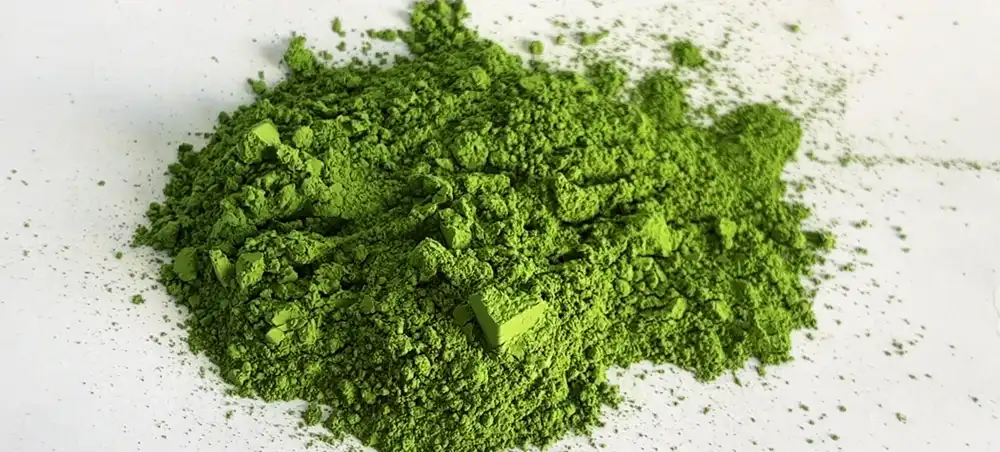
The first thing you should do is look at it. Good Matcha Tea Powder is a bright jade-green colour that doesn't change to yellow or brown over time or from rust. Since 95% of it went through 80-mesh screens, it should feel very smooth and fine when you touch it. There are different smells for each grade. The ceremonial grades smell like fresh, slightly sweet vegetables that are like seaweed. The food grades, on the other hand, smell grassier and more acrid. It is important to do a taste test to make sure that the amount of sharpness is right for the purpose and that the umami is strong enough.
Essential Certifications and Testing
Third-party validation can tell the difference between suppliers you can trust and ones you shouldn't. For USDA and EU organic approvals, farms and processes have to be checked every year to make sure they follow the law. The catechin profiles are measured by HPLC, and the amount of EGCG is confirmed to be within the acceptable range. TLC analysis proves the identity of the plant and finds anything that isn't what it seems to be, like cheaper types of green tea or fake colourings. When you check for chemical leftovers against the EC 396/2005 standards, you avoid the contamination risks that come with normal gardening. Through ICP-MS heavy metal measurement, the government makes sure that the amount of lead, cadmium, and arsenic in the air stays below certain ranges. Our ISO9001, FSSC22000, HALAL, and Kosher certificates are always up to date, and each batch comes with a full Certificate of Analysis.
Supply Chain Management Strategies
To get stable sources, you need to know how to plan your goods and how yearly output works. In Japan, the best time to harvest Matcha Tea Powder is in the spring (first flush, May). Other harvests happen all summer long. Chinese goods are cheaper and can be bought all year, but the quality isn't always the same. Building relationships with food providers that offer clear traceability is a good idea. For example, audits of the farms where the food comes from and how it is processed are one way to give this information. They use good manufacturing practices (GMPs) and always have stock on hand so that things can be sent out fast. Most of the time, lead times are between 3 and 7 working days. It costs at least 25 kg to sell commercially, but you can try out new recipes without spending a lot of money on sample sizes and small runs. You can get the best landing costs for all order sizes when you buy in bulk and have a choice of sending ways, such as DHL, FedEx, air freight, or ocean containers.
Matcha Powder Market Trends and Future Prospects
Figuring out the market's direction can help you make smart decisions about where to get materials and how to develop new products.
Growing Demand Drivers
More people in North America buy Matcha Tea Powder in places other than speciality tea shops because of health trends that stress useful ingredients and clean labels. Market research projects sustained growth in this category through the coming years. The areas that will grow the fastest are ready-to-drink drinks and dietary supplements. Organic grades typically command a price premium over conventional variants, reflecting the additional certification and traceability requirements throughout the supply chain. People are ready to pay more for sustainability that has been checked out. Just last month, we sent 8 metric tonnes of organic Matcha Tea Powder to the US. This shows that businesses want it a lot.
Innovation and Product Development
As a new use for Matcha Tea Powder, it can be added to skin care products to make anti-aging serums and creams that use its antioxidant properties. Matcha Tea Powder is being used more and more as a natural source of caffeine in energy drinks that are meant to improve brain power. Flavour creation goes beyond the usual types of flavours. To adapt to customers' changing tastes, blends with citrus, vanilla, and adaptogens (like Matcha Tea Powder with ashwagandha or lion's mane) are used as examples. Brands can stand out in markets that are already full by making their own flavours.
Sustainability and Packaging Initiatives
People who care about the environment are more likely to buy from sellers who use responsible farming methods and cut down on waste. Processing plants look more eco-friendly when they reuse shade cloth, use less water, and get their energy from green sources. New packaging uses materials that can be broken down and used again, like metal bags that can be recycled and large options that can be replaced. This means that less single-use plastic is used. These projects are in line with what companies have said they would do in terms of ESG issues. They also do this because the law requires them to for circular economy models.
Conclusion
Matcha Tea Powder isn't just a trendy ingredient; science has shown that it has useful benefits and can be used in many situations. It's also becoming very popular in the market. Make sure the seller has the right credentials and the skills to make the goods, and knows the changes between grades so they can meet the needs of different formulations. Otherwise, you won't be able to make a good buy. It is normal for Matcha Tea Powder to help you meet clean-label standards if you're making health supplements, useful drinks, cosmetics or gourmet foods. As organic certification, openness in the supply chain, and new uses for Matcha Tea Powder keep growing, it will remain a valuable tool for product creators and producers who are looking to the future.
FAQ
How does matcha compare nutritionally to regular green tea?
Since the wet leaves are thrown away and the ground leaf is eaten, Matcha Tea Powder has a lot more vitamins. Green tea that has been brewed can have up to 137 times less EGCG than Matcha Tea Powder. Furthermore, Matcha Tea Powder has more L-theanine, chlorophyll, and fibre than most teas, which makes each dose more nutrient-dense.
What certifications should I verify when selecting a matcha supplier?
Organic standards (USDA NOP, EU), quality management systems (ISO9001, FSSC22000), and religious dietary compliance (HALAL, Kosher) may be the most important certifications, depending on the market. Ask for proof that the tests for heavy metals, microbes, and chemical residues were done by respected labs such as SGS, Eurofins, and NSF. Clear companies show they are following the rules by giving Certificates of Analysis that are unique to each batch.
Can matcha be customized for specific product applications?
Of course. Many things about the products sold today can be changed, such as the particle size (60-mesh, 80-mesh, or submicron), how well they dissolve in clear drinks, whether they have caffeine or not, how the flavours are mixed, and whether they are microencapsulated to keep them from going bad. Help with formulating includes making sure the product is stable, making it taste and smell better, and giving you personalised dosage advice, whether you're making makeup, supplements, drinks, or baked goods.
Partner with Naturalin Biotech for Premium Matcha Tea Powder Supply
You can trust Naturalin Biotech to make Matcha Tea Powder. They have used the most up-to-date production tools and worked with plant products for more than 15 years. Our Matcha Tea Powder for ceremonies has been approved as organic by both the USDA and the EU. Traditional methods are used to grow it in the shade for 30 days so that the L-theanine content is high while the sharpness is low. For a long time, we've been sending goods to the US market every month with organic certificates that have been checked.
B2B buyers want more than just product specs; that's something we know. That's why we offer full design, which includes different mesh sizes (80-mesh is normal, but custom submicron mesh is also possible), sensory profiling, making it easier to dissolve, and functional development that fits your formulation goals. Our GMP-compliant facilities keep stock that is ready to ship, which gives us 3–7 days to ship. The MOQ we have is flexible enough to handle both trial samples and large business orders of 25 kg or more. Approval from a third party, FSSC22000 certification, and TLC testing procedures make sure that every batch is the same and meets strict government standards.
Whether you're making health pills, healthy drinks, or new foods, our research and development team works with you the whole way through the development process. You can email market@naturalinbio.com to get samples, talk about special needs, or learn more about how our Matcha Tea Powder solutions can help your product stand out in a crowded market.
References
1. Weiss, D.J., and Anderton, C.R. (2003). "Determination of catechins in matcha green tea by micellar electrokinetic chromatography." Journal of Chromatography A, 1011(1-2), 173-180.
2. Dietz, C., and Dekker, M. (2017). "Effect of green tea phytochemicals on mood and cognition." Current Pharmaceutical Design, 23(19), 2876-2905.
3. Scholey, A., and Owen, L. (2013). "Effects of chocolate on cognitive function and mood: A systematic review." Nutrition Reviews, 71(10), 665-681.
4. Keske, M.A., et al. (2015). "Vascular and metabolic actions of the green tea polyphenol epigallocatechin gallate." Current Medicinal Chemistry, 22(1), 59-69.
5. Yamabe, N., et al. (2009). "Prevention effects of green tea catechins on rodent oxidative stress models." Food Science and Technology Research, 15(1), 7-20.
6. Kochman, J., et al. (2021). "Health benefits and chemical composition of matcha green tea: A review." Molecules, 26(1), 85.