Sea Buckthorn Powder For Bakery, Beverage, and Dairy Formulations
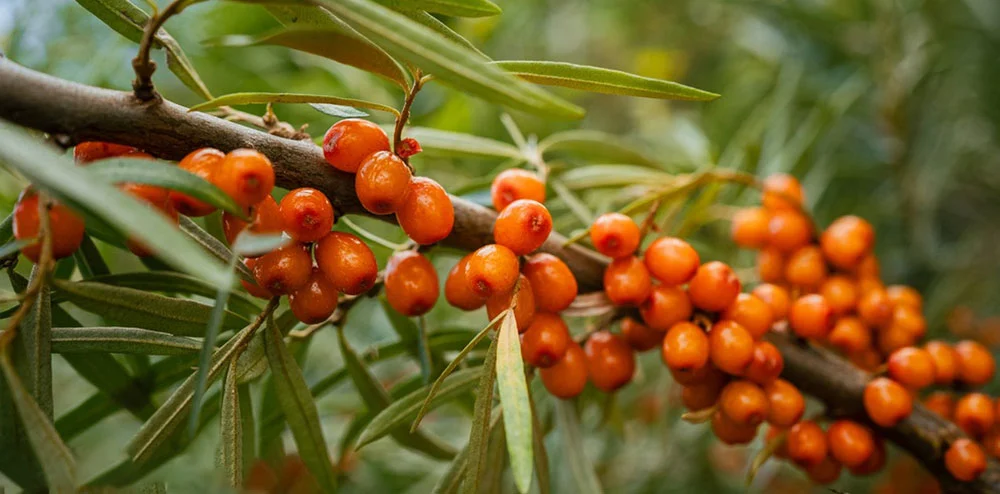
Sea Buckthorn Powder, which comes from the carefully processed berries of Hippophae rhamnoides L., has become a popular and valuable botanical ingredient in many food manufacturing industries. This bright yellow-orange powder is good for dairy, baking, and drinks because it has a lot of vitamin C, carotenoids, flavonoids, and fatty acids in a form that doesn't go bad and dissolves in water. Its naturally sour taste and high functional nutrient density make it a more appealing ingredient choice for formulating teams that want to sell their products in the growing U.S. food market.
Understanding Sea Buckthorn Powder and Its Nutritional Benefits
A Bioactive Profile That Goes Beyond Ordinary Fruit Powders
Sea buckthorn berry powder is more than just dried fruit. It keeps many bioactive chemicals stable that would break down in fresh or liquid forms if they were processed using advanced spray-drying or freeze-drying technology. Most freeze-dried varieties still have a lot of vitamin C in them. Flavonoids, carotenoids, and fatty acids are also found in the powder and help it do its job.
Formulation experts need active ingredients that stay effective after being heated and stored for a long time, so these qualities are very important. A good sea buckthorn botanical extract goes through strict TLC tests and is checked for its moisture content, bulk density, and particle distribution. These are all things that make sure that the extract can be mixed easily across production lines.
Application of Sea Buckthorn Powder in Bakery, Beverage, and Dairy Formulations
Bakery: Natural Color, Flavor Complexity, and Nutritional Enrichment
In bakery recipes, sea buckthorn powder can be used as a natural colorant, flavor enhancer, and source of nutritional value. Sea buckthorn powder gives cakes, pastries, muffins, and snack bars a warm amber color through its naturally occurring carotenoid pigments. Its natural tartness can balance the sweetness of confectionery products and create a fresher flavor profile. When incorporated at appropriate levels into baked goods, sea buckthorn powder can contribute vitamin C and antioxidant compounds without significantly affecting the texture or structure of the crumb. For bakery manufacturers seeking clean-label ingredients, sea buckthorn powder offers a versatile option for improving both visual appeal and nutritional positioning.
Beverage: Solubility, Acidity, and Functional Positioning
The powder is easy for beverage makers to mix with water, especially in spray-dried forms that are improved with maltodextrin or acacia gum encapsulation. Because it is naturally acidic, it can be used in juice blends, functional shots, smoothie premixes, and instant superfood drink packs. Its natural nutrient profile helps it fit into the functional drink group, which is growing steadily in the U.S. market.Formulation teams should know that balancing flavors with botanicals that go well together, like citrus, ginger, or green tea, makes the product taste better while keeping the bioactive integrity.
Dairy: Texture Support, Probiotic Synergy, and Consumer Appeal
In dairy mixtures like yogurt, kefir, and frozen desserts, the powder's mild acidity and dietary fiber content help the texture form and work well with probiotic cultures. Its color, which is high in carotenoids, gives cultured foods a unique look. Sensory testing of different yogurt prototypes shows that the right amount of inclusions gives color vibrancy and flavor differentiation without changing the fermentation profiles.Microencapsulated versions are more stable during freeze-thaw cycles, which is good for ice cream and frozen novelty items.
Comparing Sea Buckthorn Powder with Alternative Ingredients and Formats
Powder vs. Oil vs. Capsule Formats
People like sea buckthorn oil because it has a lot of fatty acids, but because it dissolves in fats, it can't be used in food that is mostly water. Capsules work well for vitamin users, but they can't be used in a lot of different ways to make food. On the other hand, powder can be used in bakery, beverage, and dairy systems with little process change. Compared to liquid puree, it is lighter to transport, doesn't need to be kept cold, and allows for precise dosing during production.
Compared to other superfood powders like acai or turmeric, sea buckthorn's plant extract has a unique mix of nutrients: water-soluble vitamin C and fat-soluble carotenoids. This is something that not many single-origin botanicals can do.This makes it a functional ingredient that can work with other ingredients or by itself, based on the goals of the formulation.
Organic vs. Conventional: What Procurement Teams Should Evaluate
Organically approved sea buckthorn powder costs more, but brands that want to follow organic rules can benefit from using it. Suppliers with FSSC22000, ISO 9001, HALAL, and Kosher certifications along with organic certifications make it possible for procurement teams to find a single supplier for all of their certification needs without having to find different vendors.
Procurement Considerations: Choosing the Right Supplier and Product Quality
For purchasing managers and R&D directors, qualifying a supplier means more than just offering competitive prices. In regulated markets, it is necessary to have consistent batches, be able to track raw materials, and have third-party proof. When purchasing botanical ingredients on a large scale, procurement teams always look at these main factors:
- Certification stack: FSSC22000 and ISO 9001 signal systems-level quality governance, while HALAL and Kosher certifications expand market access across faith-based consumer segments.
- Testing transparency: HPLC and TLC verification of active compounds, supported by third-party testing through SGS, Eurofins, or NSF, establishes defensible quality claims.
- Customization depth: Suppliers capable of adjusting particle size, concentration ratios, carrier matrices, and physical format (powder, granule, or liquid) reduce downstream reformulation costs.
- Supply continuity: Ready stock availability with a standard lead time of 3–7 working days, combined with scalable manufacturing capacity, mitigates seasonal raw material risk.
Naturalin Biotech supports trial orders with samples and small-kilogram quantities before commercial MOQs of 25 kg, enabling formulation validation without overcommitting procurement budgets. With over 20 years of botanical manufacturing experience, 40+ patents, and DDP door-to-door shipping to the U.S. via DHL, FedEx, air, and ocean freight, the company removes logistical friction from the sourcing process.
Ensuring Quality and Optimizing Formulations with Sea Buckthorn Fruit Powder
Batch Verification and Active Compound Testing Protocols
Every batch of sea buckthorn powder that is made goes through TLC method verification, as well as ash content analysis, moisture content analysis, and microbial limit tests. Working together with third-party accredited labs for a long time gives procurement and quality assurance teams independent proof that they can include directly in their paperwork to qualify suppliers.
Formulation Optimization Tips for Food Manufacturers
To get the best results, you need to pay attention to a number of factors. Agglomeration can be avoided in bakery uses by mixing the powder with liquids first, before dry blending. When used with natural acidity enhancers in drinks, pairing colors last longer. Adding the powder during the cool-process steps helps dairy formulators keep the heat-sensitive vitamin C. When stored in the right way, products with longer shelf lives make it easier to plan production for large business runs.

Conclusion
There is a unique place for sea buckthorn powder in health-conscious food formulation. It combines vitamin C, flavonoids, carotenoids, and Omega-7 into a stable, flexible powder that can meet the needs of functional ingredients in the beverage, dairy, and bakery industries. Sea buckthorn powder can provide both formulation value and nutritional appeal when it comes from a certified, technically skilled manufacturer with a strong quality assurance system. For brands developing new clean-label products for the U.S. market, sea buckthorn powder should be carefully evaluated for its quality, processing characteristics, and suitability for the intended application. Selecting a reliable source of sea buckthorn powder can also help manufacturers maintain consistent product quality and support their formulation goals.
FAQ
What is the recommended inclusion rate of sea buckthorn powder in dairy applications?
Typical inclusion rates for yogurt and fermented dairy products range from 0.5% to 1.5% by weight. This range provides visible color, noticeable flavor differentiation, and measurable antioxidant enrichment without disrupting fermentation processes or destabilizing dairy protein matrices.
What is the difference between organic and conventional sea buckthorn powder?
Organic-certified versions follow stricter agricultural and processing standards, prohibiting synthetic pesticides and fertilizers. They typically carry a price premium of 20–40% but are required for products targeting USDA Organic or EU Organic labeling. Conventional powder remains fully compliant with GMP and FSSC22000 standards and is appropriate for most functional food applications where organic labeling is not a brand priority.
Does sea buckthorn powder present any known allergen concerns?
Sea buckthorn is not classified as a major allergen under FDA or EU food labeling regulations. However, individuals with known sensitivities to related Elaeagnaceae family plants should be noted in product documentation. Manufacturers should confirm allergen cross-contamination status with their specific supplier's facility allergen management protocols.
Can the powder be customized for specific mesh sizes or solubility profiles?
Naturalin Biotech offers customization across particle size (60 mesh, 80 mesh, or tailored specifications), carrier matrix selection, and solubility optimization—supporting both standard and application-specific formulation requirements.
Partner with Naturalin Biotech for Reliable Sea Buckthorn Powder Supply
Naturalin Biotech stands as a trusted Sea Buckthorn Powder supplier for food manufacturers across the U.S. market, combining 20+ years of botanical expertise, 40+ patents, and comprehensive certifications including FSSC22000, ISO 9001, HALAL, and Kosher. Sample orders are available with commercial MOQ starting at 25 kg and a lead time of 3–7 working days. Reach our team directly at market@naturalinbio.com or visit naturalinbio.com to request a specification sheet or custom formulation consultation.
References
1. Zeb, A. (2004). Chemical and nutritional constituents of sea buckthorn juice. Pakistan Journal of Nutrition, 3(2), 99–106.
2. Beveridge, T., Li, T. S. C., Oomah, B. D., & Smith, A. (1999). Sea buckthorn products: Manufacture and composition. Journal of Agricultural and Food Chemistry, 47(9), 3480–3488.
3. Cenkowski, S., Yakimishen, R., Przybylski, R., & Muir, W. E. (2006). Quality of extracted sea buckthorn seed and pulp oil. Canadian Biosystems Engineering, 48, 3.9–3.16.
4. Suryakumar, G., & Gupta, A. (2011). Medicinal and therapeutic potential of sea buckthorn (Hippophae rhamnoides L.). Journal of Ethnopharmacology, 138(2), 268–278.
5. Guo, R., Guo, X., Li, T., Fu, X., & Liu, R. H. (2017). Comparative assessment of phytochemical profiles, antioxidant and antiproliferative activities of sea buckthorn (Hippophae rhamnoides L.) berries. Food Chemistry, 221, 997–1003.
6. Yang, B., & Kallio, H. (2002). Composition and physiological effects of sea buckthorn (Hippophae) lipids. Trends in Food Science & Technology, 13(5), 160–167.