Phellinus Linteus Mushroom Extract Manufacturer for Standardized Mushroom Ingredient Formulations
It's important to find a Phellinus Linteus Mushroom Extract supplier that you can trust. They should be able to show proof of species identity, a clear polysaccharide level, testing at the batch level, and paperwork that lets them get into the U.S. market. Tests for polysaccharides in the Phellinus Linteus Mushroom Extract we sell show that it has between 10% and 40% of them by UV-VIS. To buy commercial items, you need to place an order for at least 25 kg, and the lead time is between 3 and 7 working days. This guide will teach you what to look for on a specification sheet, how standardization works, and how to check out a supplier before you place an order.
What Is Phellinus Linteus Mushroom Extract and Why Standardization Matters?
Botanical Identity and Raw Material Source
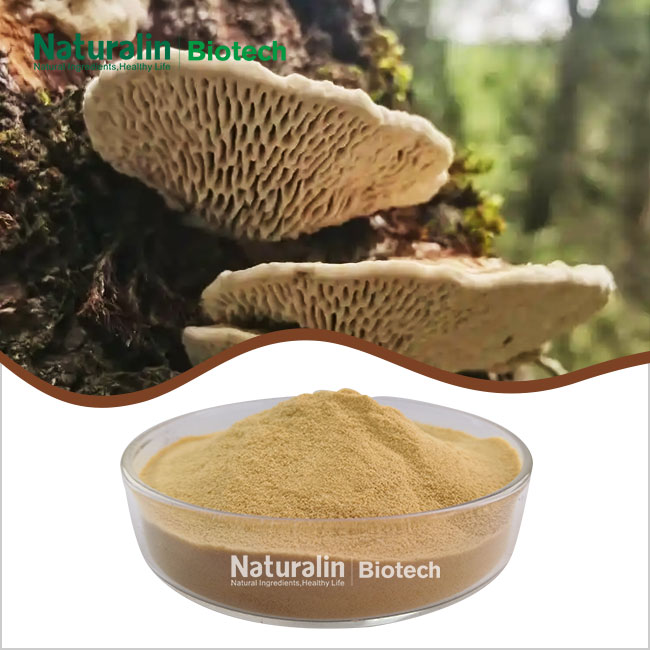
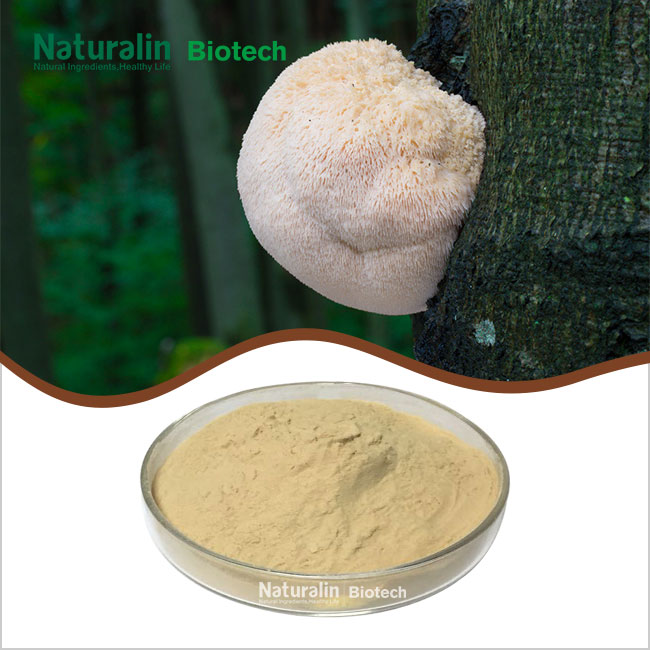
A fungus called Phellinus linteus grows on wood. In Japan, it is called Meshimakobu, and in Korea, it is called Sanghwang. The peel of the fruit is tough and fibrous, so the water-soluble compounds inside can only be used by extracting them. Identity is something we should look at more closely. There was a taxonomic study in Botanical Studies in 2012 that showed the name "sanghuang" refers to a group of species that are all related. Make sure the stuff isn't mycelium grown on grain and ask each supplier to show proof of the species and where the materials came from. Our Phellinus Linteus Mushroom Extract does not have any empty space, filler, or extra ingredients. The places where we grow the mushrooms are very clean and under strict supervision.
Active Constituents and What the Numbers Mean
Some reviews, like the one by Zhu and colleagues in Current Medicinal Chemistry (2008), talk about the polysaccharides, polyphenols, and styrylpyrones (like hispidin) that can be found in this mushroom. Both water extraction and dual extraction are used to keep the polysaccharides, beta-glucans, and triterpenes there. People who are buying something should know that total polysaccharides, beta-glucans, and extract ratios all mean different things and can't be used together. "30% polysaccharides" on a label only means something if it says how it was made. Our grades have between 10% and 40% polysaccharides, according to UV-VIS tests. Let our technical team know during the brief if your formula needs a separate marker compound so that we can talk about it.
Reading the Research Responsibly
Lab and animal studies have given us most of what we know about Phellinus linteus. We still don't know much about people. In his 2014 review for Biomedical Journal, Wasser talks about the need for more strong clinical evidence and clearer forms of mushrooms. This means that for formulators, an ingredient that stays the same is just as important as one that is biological. If the rules aren't clear, the outcomes of one batch can't tell you what will happen in the next. When brands make claims in the U.S., we advise them to stick to the structure/function language that DSHEA allows and have their regulatory team sign off on the final wording. A history of use doesn't prove an effect, but it does give us some background.

Key Benefits and Uses of Phellinus Linteus Mushroom Extract for Formulators
Product Applications
It is used to make functional beverage powders, health foods, beauty-from-within cosmetics, dietary supplement capsules and tablets, mushroom coffee, and herbal tea blends. The powder doesn't melt when heated, which is helpful for the hot steps in the process and brewing. The taste is light and neutral. Traditional medicine and early research have linked mushrooms to a healthy immune system, cells that are healthy, and a healthy liver. There are no guarantees on those products, just ideas. The language you can use in each market is also different. Our extract is already being used in these ways by coffee brands and supplement makers all over the world.
Formats and Customization
You can choose from 80 mesh or 60 mesh powder forms of Phellinus Linteus Mushroom Extract, but we can change the mesh size to meet your needs. Along with granules and liquids, we also do development for taste, solubility, function, and formulation. There are various methods for measuring and mixing powder. High-speed filling lines work better with granules than liquids. Liquids work well with ready-to-drink and syrup ideas. We can make changes to the concentration and active ratio based on your needs with our research and development team. There are also microencapsulation, water solubility and dispersibility, and polysaccharide purification technologies that can be used for projects that need a certain texture or way to dissolve.
Handling in Production
Before you go big, make sure you like the taste, color, flow, and moisture in your current system. Our 80-mesh powder flows easily, making it simple to fill capsules and dose sachets. Don't open the drums; instead, store them somewhere cool and dry. This is because mushroom extracts like to soak up water from damp air. You can keep them for two years. You should do a pilot test for drinks to make sure that the dose you want has the right solids, taste, and spread. This is why the outcomes change based on pH, temperature, and other factors. Of course, we can send small amounts as a test.
How Phellinus Linteus Mushroom Extract Is Standardized and Selected?
Specification Parameters and Test Method
There are written rules that every batch must follow when you standardize something. Ours comes in the form of a powder with 80-mesh or 60-mesh particles and 10% to 40% polysaccharides by UV-VIS. Colorimetry is used in most UV-VIS polysaccharide tests. A well-known example is the phenol-sulfuric acid method that Dubois and his colleagues wrote about in Analytical Chemistry in 1956. There should be things like moisture, ash, heavy metals, microbiological limits, and pesticide residues in a full specification. HPLC, TLC, UV, and AAS instruments are used in our lab in line with HACCP and GMP rules. You can ask any supplier to give you the method, the lab, the minimum that is guaranteed, and the information that is used to do the math.
Water Extraction Versus Dual Extraction
A lot of the time, polysaccharides and beta-glucans that dissolve in water are pulled out by hot water. Alcohol can get to compounds that are less polar, like triterpenes and some polyphenols. A dual process is used to make both of them bigger. Pick out a goal. If the drink is made of polysaccharides that dissolve in water, it may only need to be taken out with water. If it's made up of more than one compound, it may need to be taken out twice. We also have a patent on mushroom extract (ZL202210227047.6), which we use in both ways. Our QA and QC teams keep an eye on production all the time. In other words, the process you agree to for a sample will be used for all orders.
Extract Versus Whole Powder, and Comparison with Reishi and Chaga
Because a concentrated extract has more polysaccharide than whole mushroom powder, you can use less of it and make fewer capsules. It costs less per kilogram and has more insoluble fiber when you buy whole powder. How much you need to do affects the price per serving. People in the U.S. can tell the difference between Chaga and Reishi because they come from different species and look and taste different. This plant has a mild flavor that can add something special to a blend. It tastes good with both tea and coffee. No matter what you choose, make sure you know if the powder has a base. There aren't any in ours because we don't add any fillers or stuff.
Quality, Safety, and Compliance Requirements for U.S. Procurement
Building a COA Checklist
On a useful certificate of analysis, you can find the name of the plant, the batch number, the amount of polysaccharides and how they were calculated, the heavy metals, the microbiology, the residues of pesticides and solvents, the allergens or GMOs, and the amount of moisture and ash. Not just for the sample, but for all of them as well. We send our goods to outside labs like NSF, SGS, and Eurofins for testing all the time. That, along with our own data, gives your QA team a check from the outside. See if each COA matches the written specification. If any tests are missing, mark them as "not meeting specification." That's it.
Certifications and Audit Options
OV-Kosher, GMP, ISO 9001, FSSC 22000, and Organic are some of the certifications we have for Phellinus Linteus Mushroom Extract. You don't have to use organic material. The ISO and HACCP systems we use to handle food have been in place since 2008. Make sure that every certificate you have covers your product and the dates it says it does. Your quality assurance (QA) and operations teams are welcome to stop by the factory or watch a video tour so they can see the workshop, equipment, and records for themselves.
U.S. Regulatory Points
This is what the FDA says you should do to make dietary supplements in the US: follow the Dietary Supplement Health and Education Act of 1994 and 21 CFR Part 111. If a brand makes claims about structure or function, they need to tell the FDA within 30 days of going on sale and include the required disclaimer. There is no need for the FDA to approve dietary supplements before they are sold. This means that your regulatory team is in charge of the claims and the status of the ingredients. Tags should also be read by people who are weak, allergic to mushrooms, or taking medicine, such as pregnant women. This book tells you about general things, not personal ones.

Evaluating a Manufacturer and Placing Your First Order
What to Look for in an Extract Manufacturer?
First, make a list of people who make extracts and people who trade in raw materials. An extraction, drying, sieving, and testing process is run by a factory. This lets the factory answer questions about the process and keep track of each lot. Naturalin Biotech opened in 2017 as a branch factory of Naturalin Bio-Resources, a business that has been around since 2006. The business went public on the NEEQ in 2018. It has more than 40 patents and was named a Hunan Famous Brand in 2022. In 2019, we set up a base for organic farming. Our factory in Hunan makes more than 1,000 tons of natural ingredients every year.
A Practical Procurement Sequence
First, write a brief that describes the dosage form, the target polysaccharide, the organic status, the target market, and the annual volume. After making a short list of suppliers, ask each one for samples, the specification, and a copy of the most recent COA. Test your formula in small amounts to see how it tastes, dissolves, flows, and reacts with microbes. In the end, deal with quality and business agreements. The minimum order quantity for business is 25 kg, and we offer samples and small test orders. With ready stock, you can ship quickly. Small orders are sent by DHL or FedEx, while larger ones are sent by sea or air. For the U.S. market, we offer door-to-door delivery (DDP), and we respond to all questions within 24 hours.
Common Buying Mistakes
Price per kilogram can be deceptive when the specs are different. It's possible that a low price means there is less polysaccharide, not enough testing, hidden carriers, or it's hard to track. People also make a lot of mistakes when they measure total polysaccharides and beta-glucans as the same thing, when they skip species authentication, and when they bring in regulatory staff too late in the project. The growth of extracts can also be stopped by things that don't dissolve well, have a strong taste, or have a lot of color. The procurement, R&D, quality assurance, and regulatory teams should all look over the sample and papers at the same time. When a test shows a problem, our team adds to the reviews and changes the format, concentration, or mesh size.
Conclusion
When people buy standardized Phellinus Linteus Mushroom Extract, they should make sure that the species is correct, explain the polysaccharide level and test method, and compare each batch to a written list of requirements. It turns out that extract ratios, total polysaccharides, and beta-glucans all seem to measure different things. As the study also discovered, profiles made with water and dual extraction are not the same. Also, the amounts and prices per serving for extract and whole powder are not the same. Claims must be carefully worded and fit the U.S. market since most research on mushrooms is still done in labs. A full COA, testing by a third party, valid certifications, and clear carrier disclosure all help with safety and quality review. So, the total cost should include both the results of the pilot and the risk from the government. Test gaps can be hidden by price alone. The best ways to get a good idea of a supplier are to look at samples, paperwork, and see if they can make things.
FAQ
What polysaccharide range do you offer?
Our Phellinus Linteus Mushroom Extract has between 10% and 40% polysaccharides, according to UV-VIS tests. Our team will help you find a grade that fits your level and what you need to do to get there.
What is the minimum order quantity?
You can order test samples and small orders to see how they work. The MOQ for business use is 25 kg. The usual lead time is three to seven business days, and we have stock that can be sent right away.
Can you customize the format?
Yes. We have gels, powders, and granules with particles as small as 80 mesh, as large as 60 mesh, or as large as you need. To bring your product idea to life, we can also help you with formulation, solubility, sense of taste, and function development.
Which certifications are available?
Organic, HALAL, Kosher, GMP, ISO 9001, and FSSC 22000 have all given us the green light. For your lot and destination, please ask our team to make sure that the scope and validity are still valid.
Contact Naturalin Biotech for Phellinus Linteus Mushroom Extract Samples and Quotes
You can buy Phellinus Linteus Mushroom Extract from Naturalin Biotech. They have organic options and stock that is ready to ship in 3–7 business days. To get the polysaccharide level, format, yearly volume, and place you want it to go, send market@naturalinbio.com an email. We'll get back to you with a quote, a sample plan, and a COA in 24 hours. Visit naturalinbio.com to find out more.
Please note: All products and related services on this website are offered exclusively to corporate clients. We do not accept orders from individual buyers or retail orders.
References
1. Botanical Studies (2012): Wu SH et al., "Species clarification for the medicinally valuable 'sanghuang' mushroom."
2. Current Medicinal Chemistry (2008): Zhu T, Kim SH, Chen CY, "A medicinal mushroom: Phellinus linteus."
3. Biomedical Journal (2014): Wasser SP, "Medicinal mushroom science: current perspectives, advances, evidence, and challenges."
4. Analytical Chemistry (1956): Dubois M et al., "Colorimetric method for determination of sugars and related substances."
5. Dietary Supplement Health and Education Act, U.S. Congress (1994).
6. Code of Federal Regulations, Title 21, Part 111, U.S. Food and Drug Administration (2007): "Current Good Manufacturing Practice in Manufacturing, Packaging, Labeling, or Holding Operations for Dietary Supplements."