Organic Chaga Mushroom Extract Supports Modern Functional Ingredient Formulations
Organic chaga mushroom extract, derived from the sclerotium of Inonotus obliquus, has become a high-demand ingredient across nutraceutical, functional food, and cosmetic markets. Unlike raw mushroom powder, certified organic chaga extract delivers standardized beta-glucan concentrations (20%–40%) verified by enzyme solution-UV testing, ensuring consistent bioactivity in every production batch. As consumer preference for clean-label, traceable botanical ingredients grows, formulators and procurement teams are actively seeking suppliers who can deliver both purity and batch-to-batch reliability. This article outlines what makes chaga extract worth your attention—and how to source it wisely.
Understanding Organic Chaga Mushroom Extract and Its Benefits
What Sets Organic Certification Apart?
The organic name isn't just for marketing; it shows that the product meets real standards for sourcing. For organic chaga mushroom extract to be EU and USDA NOP-certified, it has to come from wild birch trees that have not been treated with manmade chemicals, heavy metals, or ionizing radiation. QA and regulatory teams care about this because the risk of contamination goes down a lot when traceability of raw materials is built into the supply chain from the start.
Key Bioactive Compounds and Their Functions
Chaga's useful properties come from a well-known group of phytochemicals. Beta-glucans change the immune reaction by turning on natural killer cells and macrophages. Betulinic acid and betulin, which are taken straight from the birch host, have been shown in preclinical studies to reduce inflammation. Chaga has one of the highest ORAC values ever recorded for a plant product because it contains a lot of melanin. Together, these chemicals help the nervous system and protect against free radicals in final products.
Dosage, Safety, and Regulatory Considerations
According to research and traditional use, a daily dose of 500 mg to 1,500 mg of standardized extract (20%–30% beta-glucan) can help the immune system and fight free radicals. Chaga extract is accepted as a functional food ingredient in many countries from a legal point of view. Procurement teams should make sure that the suppliers they work with have up-to-date certificates for the export markets they want to reach, such as EU, HALAL, Kosher, and ISO-compliant paperwork.
Comparing Chaga Extract Forms and Quality Standards
Powder vs. Liquid vs. Tincture Formats
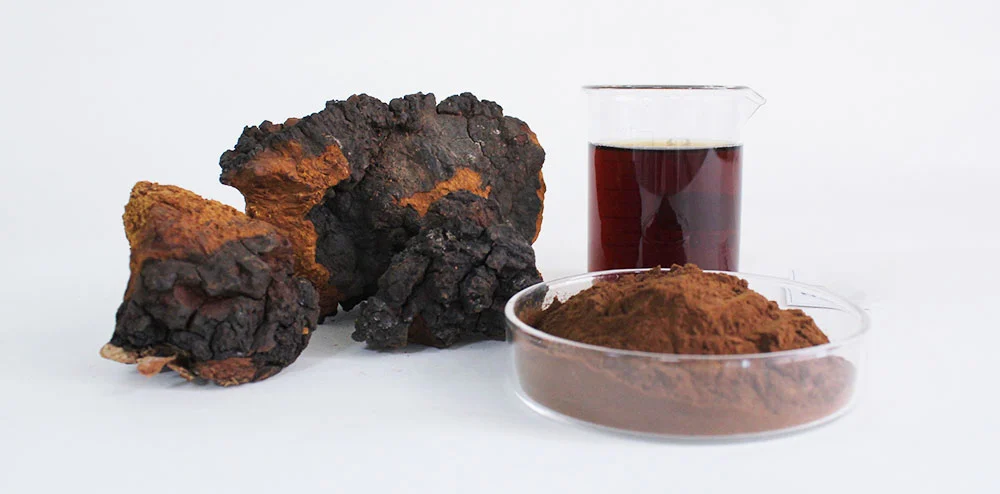
For different uses, different product formats work best. Hot-water-extracted powder works great in mushroom coffee, beverage mixes, and pill fills because it spreads out evenly and keeps its beta-glucan structure at high temperatures. It is better for full-spectrum adaptogen mixes and medicines to use dual-extraction forms (water + ethanol) because they get rid of both water-soluble polysaccharides and fat-soluble triterpenes. For functional beverage concentrates and shots that can be drunk, liquid extracts work well because they dissolve quickly.
What to Look for in a Quality Assessment?
When analyzing organic chaga mushroom extract suppliers, people who work in procurement should ask for specific quality paperwork instead of taking general certificates of analysis. Before you approve a seller, you should check these test standards:
- Active ingredient range: Beta-glucan content was checked and found to be 20% to 40% using the enzyme solution-UV method.
- Heavy metal panels: Lead, arsenic, cadmium, and mercury levels are within the standards set by the USP and the EU Pharmacopoeia.
- Microbial testing: Total plate count, yeast, and mold are all within the standards for food-grade products.
- Third-party validation: reports from SGS, Eurofins, or NSF that back up the CoA data from within the company.
Getting organic chaga mushroom extract without going through these steps of checking creates a risk of not following the rules, especially for products sold in the US and EU.
Pricing and Value Considerations for Bulk Orders
The price per kilogram of organic chaga extract changes based on the level of approval, the quantity of beta-glucan, and the method used for extraction. Dual-extracted, EU/USDA organic-certified powder with 30%+ beta-glucan is more expensive than regular powders that are extracted with water. If you want to buy a lot of something, you should compare the overall value, which includes the extraction yield, the active ingredient density, and the formulation efficiency, instead of just the cost per kilogram.
How to Choose the Right Chaga Extract for Your Business?
Match Extract Specification to Application Goal
The highest concentration of beta-glucan is not always needed in a formulation. For immune-boosting drinks and soft pills, a 20% beta-glucan water extract is usually enough. Dual-extraction at 30%–40% beta-glucan gives a fuller bioactive profile for adaptogenic blends and anti-aging cosmetic serums that target polyphenol and triterpene content. Costs can be cut without losing effectiveness when specifications are matched to applications.
Evaluate Supplier Certifications and Customization Capabilities
A trustworthy supplier should have current certifications that are relevant to your market. In addition to ISO9001, FSSC22000, HALAL, and Kosher certifications, it is helpful for R&D if your provider can modify the mesh size (60 or 80 mesh), particle solubility profile, and blended formulas. Suppliers who provide OEM formulation development services, such as changing the way the product smells, making it easier for water to mix with other substances, and cleaning up polysaccharides, cut down on the time and processes needed to make the product.
Supply Chain and Inventory Reliability
There is a natural yearly risk in getting wild mushrooms. Risk is reduced significantly by suppliers who have established buying networks, keep goods under control, and can ship within 3–7 working days from ready stock. Before committing to a commercial MOQ (25 kg minimum for most professional suppliers), find out how much your supplier can produce in a year, if they offer trial orders, and how they keep track of their raw materials for organic chaga mushroom extract.
Integrating Chaga Extract into Functional Ingredient Formulations
Application Scenarios Across Product Categories
Organic chaga mushroom extract works well with many of the product categories that are currently expanding in the US market. Among the active types are mushroom coffee blends, functional energy drinks, immune capsules, beauty-from-within supplements, and cosmetic serums. Solubility, color balance, and particle size are all important for different uses, and you should talk to your provider about these things when you're evaluating samples.
Stability and Compatibility in Formulation
It is possible to use chaga extract powder in hot-fill beverage processing and baked functional foods because it doesn't change when heated. Its dark brown color and earthy taste are typical, and they should be taken into account in the sensory design of the end product. If you mix chaga with other plant actives like reishi, lion's mane, or ashwagandha, you should make sure that none of the active ingredients work against each other and affect the product's bioavailability or shelf life over the two-year period.
Compliance and Labeling Requirements
US supplement brands have to follow FDA 21 CFR Part 111 (GMP for dietary supplements) and make sure that the claims on their labels are backed up by evidence. EU brands have to follow more rules about making health claims because of the EFSA. Buying from a source that is GMP-certified and also has organic licenses from both the EU and the USDA makes the compliance review process easier and reduces the amount of paperwork your regulatory team has to do.
Procurement Channels and Best Practices
Direct Wholesale vs. Platform Sourcing
When you buy things directly from makers, rather than going through a site, you can usually get more accurate prices, faster responses to customization requests, and more consistent batches. Setting up direct contact with the maker of high-specification ingredients like standardized organic chaga mushroom extract makes it easier for your R&D and QA teams to look over process data together, ask for custom specs, and get to technical paperwork.
Negotiating Terms for Large-Scale Orders
When buying in bulk, buyers should talk about more than just the price per kilogram. Total procurement value is affected by lead time guarantees, safety stock plans, certificate renewal schedules, and multi-batch pricing tiers. For US buyers, suppliers who offer open payment terms and DDP (Delivered Duty Paid) logistics choices, such as DHL/FedEx, air freight, or ocean shipping, make things easier for them and make it easier to predict landing costs.
Building Long-Term Supplier Partnerships
Long-term supply deals with a reputable manufacturer offer more security benefits than just price locks. They let your team have a say in how processes are improved, get priority supplies during times of high demand, and stay in compliance with regulations as certification requirements change. A practical way to check the quality of a supplier before going big is to start with a free sample and a small-batch trial order, which are both offered below the business MOQ.
Conclusion
Organic chaga mushroom extract from Inonotus obliquus is a well-known beneficial ingredient that has been shown to help the immune system, fight inflammation, and protect cells from damage. Procurement teams and formulators should choose where to get organic chaga extract based on the amount of standardized beta-glucan it contains, quality data that has been checked by a third party, the level of approval of the seller, and how well they can customize the product. The easiest way to make sure your product does well is to find a maker whose facilities are GMP-compliant and whose products have organic qualifications (EU/USDA NOP) and formulation support infrastructure.
FAQ
What is the difference between water extraction and dual extraction for chaga?
Water extraction focuses on polysaccharides that dissolve in water, especially beta-glucans, which help the defense system work. Triterpenes that dissolve in fat, like betulinic acid and betulin, are also captured by dual extraction (water + ethanol). If the goal of your recipe is to change the immune system, water extraction is enough. Two-step extraction is the best way to get a full-spectrum adaptogenic profile with anti-inflammatory properties.
How is beta-glucan content verified in chaga extract?
The enzyme solution-UV method is used by Naturalin to measure the amount of beta-glucan present. The company's data can be linked to reports from other labs, like SGS and Eurofins. This test tells the difference between real beta-glucans and alpha-glucans, or starch, which can make polysaccharide readings look higher in extracts that aren't very good.
What certifications should I request from my chaga supplier?
For the US and EU markets, you must ask for at least an EU Organic or USDA NOP Organic certificate, as well as an ISO9001, FSSC22000, HALAL, or Kosher certificate and a recent CoA with heavy metal and bacteria test results. Under FDA 21 CFR Part 111, applications for dietary supplements also need proof that they follow GMP guidelines.
What is the minimum order quantity for organic chaga extract?
MOQ for business is 25 kg. Buyers who are qualified can place sample and small-kilogram trial orders before committing to full business amounts.
Partner with Naturalin Biotech for Your Organic Chaga Extract Supply
Naturalin Biotech makes organic chaga mushroom extract professionally. They have been extracting plants for more than 20 years and have GMP-certified facilities as well as current EU, NOP, ISO9001, FSSC22000, HALAL, and Kosher certificates. Standardized chaga extract (20% to 40% beta-glucan, 60/80 mesh powder) is in stock and can be sent out in 3 to 7 days. Buyers who meet the requirements can get free samples. You can email our team at market@naturalinbio.com or go to naturalinbio.com to get a detail sheet and begin your trial order.
Please note: All products and related services on this website are offered exclusively to corporate clients. We do not accept orders from individual buyers or retail orders.
References
1. Géry, A., Dubreule, C., André, V., et al. Chaga (Inonotus obliquus), a Future Potential Medicinal Fungus in Oncology? — Journal of Gastrointestinal Cancer, 2018.
2. Glamočlija, J., Ćirić, A., Nikolić, M., et al. Chemical Characterization and Biological Activity of Chaga (Inonotus obliquus), a Medicinal "Mushroom." — Journal of Ethnopharmacology, 2015.
3. Shashkina, M. Y., Shashkin, P. N., & Sergeev, A. V. Chemical and Medicobiological Properties of Chaga. — Pharmaceutical Chemistry Journal, 2006.
4. Lull, C., Wichers, H. J., & Savelkoul, H. F. J. Antiinflammatory and Immunomodulating Properties of Fungal Metabolites. — Mediators of Inflammation, 2005.
5. Jayachandran, M., Xiao, J., & Xu, B. A Critical Review on Health Promoting Benefits of Edible Mushrooms through Gut Microbiota. — International Journal of Molecular Sciences, 2017.
6. Akramiene, D., Kondrotas, A., Didziapetriene, J., & Kevelaitis, E. Effects of Beta-Glucans on the Immune System. — Medicina (Kaunas), 2007.