Organic Chaga Mushroom Extract for Beverage Brands: Processing and Sourcing Factors
Organic Chaga Mushroom Extract works best in drinks when the brand controls four things: how the extract is made, where the raw materials come from, how each batch is tested, and how the powder acts in the finished drink. The level, color, and taste of beta-glucan depend on how it was extracted. Traceability and compliance are set by sourcing and certification. Tests of how well the ingredient dissolves and tastes in coffee blends, teas, and ready-to-drink drinks show if it works. In this guide, we explain each factor in simple terms and share what we offer at Naturalin Biotech so that your team can look at different suppliers before the pilot run.
What Organic Chaga Mushroom Extract Is and Why Buyers Care
Source and Botanical Identity
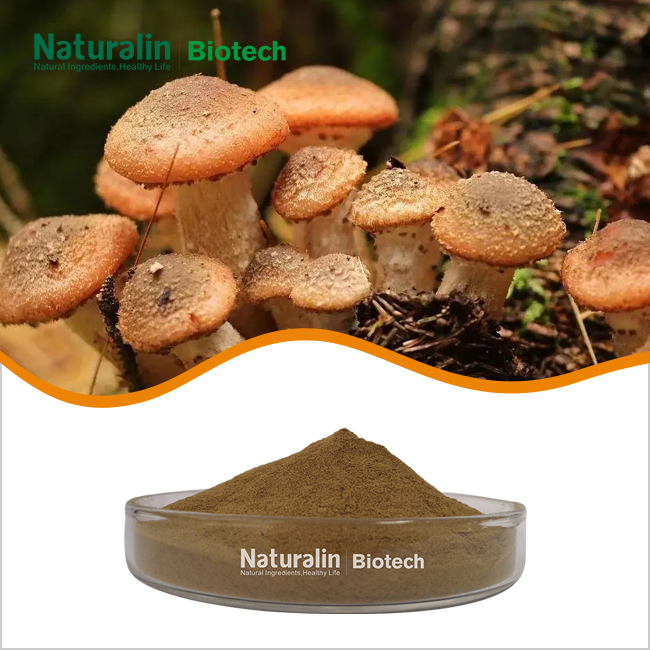
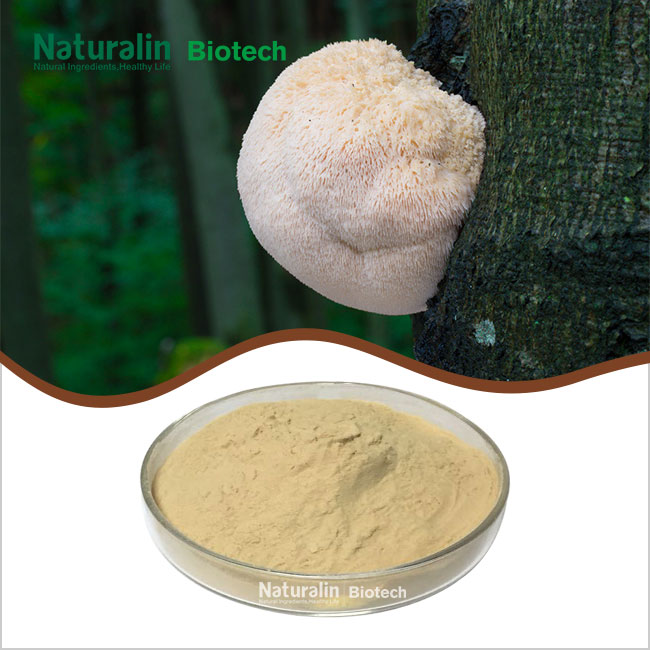
Inonotus obliquus is also known as "chaga." It mostly grows on birch trees in cold places like northern Europe, Russia, Canada, and some parts of northern Asia. A hard mass of fungal tissue mixed with wood forms on the trunk and is used for trade. This is called the dark conk. Polysaccharides, such as beta-glucans, triterpenes, and phenolic compounds, have been written about in reviews of the species. Botanical identity is important because mycelium-on-grain products and materials that look like them can be made of very different things. On every specification sheet, the supplier should list the Latin name, the plant part, and where the product comes from.
Extract Versus Raw Chaga Powder
Ground conk is all that raw chaga powder is. Chitin in its cell walls keeps water from getting to much of the useful stuff inside. In an extract, soluble compounds are pulled into a liquid by hot water, which is sometimes followed by ethanol. The liquid is then concentrated and dried. Most of the time, this makes a finer powder with a clear active level that mixes better into drinks. The enzyme solution-UV method was used to test our Chaga Mushroom Extract and found that it contains 20% to 40% beta glucan. It is easier for the beverage team to dose if they have a number to go by instead of guessing.
What Organic Certification Does and Does Not Show
Organic certification means that the growing, gathering, processing, and handling of a product follow specific standards. In the United States, the USDA National Organic Program sets requirements for wild crops, allowing wild-harvested chaga to qualify when the harvesting area and methods meet the relevant standards. However, organic certification alone does not guarantee high potency. Even a certified batch of Organic Chaga Mushroom Extract may contain relatively low levels of beta-glucans, so buyers should carefully review both the organic certificate and the certificate of analysis (COA). When sourcing Organic Chaga Mushroom Extract, it is important to verify the certification status, beta-glucan content, and other key quality indicators. We offer both conventional and organic grades, with organic options certified under EU or USDA standards. This allows brands to select the appropriate Organic Chaga Mushroom Extract grade based on their labeling requirements, product positioning, and target price. By checking certification documents alongside laboratory test results, buyers can make more informed decisions when choosing Organic Chaga Mushroom Extract for their product lines.

How Organic Chaga Mushroom Extract Is Processed
Raw Material Preparation
Before extraction, quality comes first. When conks come in, they are sorted, checked out, and cleaned to get rid of bark, soil, and other foreign objects. Then, the material is milled so that the solvent can reach all of the tissue evenly. It is dried until the moisture level is just right. If you skip these steps, the yields will be uneven, and the color will vary from lot to lot. Because mushrooms can take in harmful chemicals from the environment, screening them at the point of entry is a good practice for all suppliers. Our GMP-compliant workshops and in-house lab, which has HPLC, TLC, UV, and AAS instruments, let us make sure that the material we use meets the requirements before it goes into production.
Water Extraction and Dual Extraction
Compounds that dissolve in water, like beta-glucans and other polysaccharides, are what hot water extraction is after. An extra step called "ethanol" is added in dual extraction to get out compounds that dissolve in alcohol, like triterpenes. Every route shows a different picture. For drinks where polysaccharide content is the most important thing, water extracts are often used. Brands that want a wider range of compounds should use dual extracts. Method changes color and taste, so the choice should match how the drink is made. You can choose between water extraction and dual extraction. Our 20%–40% beta glucan range lets formulators choose the level that works best for their budget and serving size.
Drying, Particle Size, and Product Forms
The extract is turned into a powder after it has been concentrated. How quickly the powder wets and how much it settles in the cup depends on the particle size. We offer powders with 80 mesh, 60 mesh, or a custom mesh. We can also give you granules and liquids. The powder can be kept for two years. It is usually faster to mix instant coffee blends and stick packs with a finer mesh. The work our team does on microencapsulation, water solubility and dispersibility, and polysaccharide purification gives us useful solutions for tough situations, like making clear teas or ready-to-drink bottles with low sediment.
Quality and Certification Factors for Beverage Buyers
Testing Methods and the Certificate of Analysis
Beta-glucan test results for Organic Chaga Mushroom Extract depend on the analytical method used. Enzyme solution-UV testing is the method specified in our product specifications, so buyers should confirm that competing quotations use the same testing method and reporting basis. Comparing prices based on different analytical methods can lead to misleading conclusions. For every batch of Organic Chaga Mushroom Extract, the certificate of analysis (COA) should clearly state the product identity, beta-glucan content, moisture level, microbiological limits, and heavy metal levels. Our laboratory conducts HPLC, TLC, UV, and AAS testing, and we also work with independent laboratories such as NSF, SGS, and Eurofins for additional verification. When evaluating Organic Chaga Mushroom Extract, buyers should request retained samples and detailed information about the analytical methods used in each report. This helps your quality assurance team verify the results consistently and make a more reliable assessment of product quality. Choosing Organic Chaga Mushroom Extract with batch-specific documentation and transparent testing procedures can also support more effective supplier comparisons and quality control.
Certifications That Matter in the U.S. Market
U.S. beverage brands usually need proof in three areas: that the product is organic, that it is safe to eat, and that it was made in a safe way. Some of the certifications we have on file are NOP and EU organic, ISO9001, FSSC22000, GMP, HALAL, and Kosher. Food companies have to follow FDA rules, and companies that sell products that look like supplements also have to follow CGMP rules for supplements in 21 CFR Part 111. The certificates a supplier gives you don't replace your own compliance review, but they do speed up the approval process for the supplier. Always make sure that each certificate still works for the right product and site and that the dates are still written on them.
Contaminant Control and Safety Review
Because chaga grows in the wild, controlling contaminants should get a lot of attention. Ask for information on heavy metals, pesticides, microbes, where the food came from, and whether it was irradiated or GMO. The ingredient itself is also looked at for safety. Oxalates are naturally found in chaga, and case reports have linked very heavy, long-term use to kidney problems. Brands should carefully decide on serving sizes with the help of their regulatory advisors and check the wording on the label against FDA rules. A good supplier will answer these questions straight away, and our team responds to requests for documentation within 24 hours.
Selecting Organic Chaga Mushroom Extract for Beverage Formulation
Matching Format to the Drink
Add powder to mushroom coffee blends, instant drinks, stick packs, and dry premixes to make them work. Shots, drops, and syrups made from liquid extracts work, but they need more controls for alcohol content, storage, and compatibility. Granules tend to make less dust and flow better on blending lines. We have liquids, granules, and powders. Our powder is used in functional drinks, dietary supplements, health foods, mushroom coffee, and cosmetic formulations. First, choose a format that works with your filling line and packaging. Then, change the strength within the 20%–40% beta-glucan range.
Testing in the Real Beverage Matrix
Even if the powder breaks down in water, it might not work in your product. A substance's pH, sugar, minerals, fat, carbonation, preservatives, and heat treatment can all change how it acts. Test the recipe on a bench and write down the time it takes to dissolve, the amount of sediment, the amount of foam, the mouthfeel, the color, and the filtration. Then move on to a pilot batch that is processed in the same way as the main batch. Finally, check the shelf life. Before a commercial run, this sequence checks for haze, color drift, and filter clogging. We give teams free samples and small trial amounts so they can finish this work before committing to the 25 kg commercial MOQ.
Managing Flavor and Solubility
You can get earthy, woodsy, bitter, or roasted notes from chaga. These notes often blend in well with coffee blends, but they may stand out in light teas or flavored waters. Because bitterness can rise with dose, sensory panels should test more than one dose level. Because a dark extract changes the way a drink looks, how well it dissolves is also important. As part of our customization options, we work with a well-known coffee brand on functional and formulation development as well as sensory and solubility work. Tell our R&D team early on what flavor and clarity you want, and they'll make changes to the extract to meet your needs.
Sourcing, Supplier Evaluation, and Long-Term Supply
Manufacturer Versus Trader
When sourcing Organic Chaga Mushroom Extract, buyers should first understand whether they are dealing with a direct manufacturer, distributor, or trading company. It is important to verify who owns the production facility, which processes are outsourced, where the raw materials come from, and how inventory is managed. A direct manufacturer is generally better positioned to explain production procedures and adjust extraction parameters when necessary. Naturalin Biotech was established in August 2017 as a branch factory of Naturalin Bio-Resources, a company with a history dating back to 2006. The company was listed on the National Equities Exchange and Quotations (NEEQ) in 2018 and has obtained ISO and HACCP quality management system certifications. It also holds more than 40 patents, including a patent related to mushroom extract (ZL202210227047.6). For buyers evaluating an Organic Chaga Mushroom Extract supplier, these company details can provide useful background when assessing manufacturing experience and technical capabilities. We also welcome customers to arrange video inspections or visit the factory in person to learn more about the production process. A factory inspection can help buyers verify the facilities, review quality control procedures, and assess whether the supplier is suitable for long-term Organic Chaga Mushroom Extract cooperation.

Commercial Terms and Procurement Checks
Surprises are avoided by writing down the comparison. Get the same things from each supplier: the specs, the test method, the certificates, the sample terms, the minimum order quantity (MOQ), the price levels, the lead time, the capacity, the payment terms, and the shipping terms. We offer samples and small trial orders, and our commercial MOQ is 25 kg. A typical lead time for ready stock is 3–7 working days. We ship by DHL or FedEx, by air or by sea. For the U.S. market, we offer DDP door-to-door delivery, which makes it easier to figure out the landed cost. There are many ways to pay.
Risks to Avoid and Building Supply Security
Many people make the mistake of thinking that the fact that something is organic is proof that it works, thinking that picking something in the wild means it can be tracked, and comparing test results from different methods. Another is not doing pilot tests because the data from the lab looked good. As soon as you get approval, you should decide what levels of beta-glucan, moisture, particle size, color, and microbiological results are acceptable. Keep the samples you keep and ask for notice if the origin or process changes. Compare your safety stock to your sales forecast, and think about getting more from a different source. Every year, our group makes more than 1,000 tons of natural ingredients, and we make sure that there is a steady supply of wild mushroom extracts.
Conclusion
Organic Chaga Mushroom Extract works well in drinks when buyers look at it as a whole, not just one number. Different extraction methods, such as water or dual, change the amount of beta-glucan, its color, and its taste. The drying process, mesh size, and format determine how the powder mixes. Organic certification helps with tracking, but it doesn't prove effectiveness. This is why batch-specific testing, a consistent method like enzyme solution-UV, and third-party verification are still needed. Problems with sedimentation, bitterness, and color can be avoided by doing bench, pilot, and sensory tests in the real beverage matrix. There is less supply risk when the status of manufacturing, certificates, MOQ, lead time, and change control are checked. When these steps are taken together, they give the formulation, quality, and purchasing teams a way to agree on what to do and keep production going.
FAQ
What is the difference between chaga extract and chaga powder?
Ground conk is what chaga powder is. A certain amount of beta-glucan is added to an extract using water or dual extraction. It's between 20% and 40% for us.
Does organic certification mean higher beta-glucan content?
No, certification covers rules for making and handling things. To be sure of its potency, look at the certificate of analysis and the way it was tested.
What are the MOQ and lead time?
For business use, the MOQ is 25 kg. You can get samples or place small test orders, and the lead time is usually between 3 and 7 working days.
How should a brand set the dose?
The dose depends on the type of drink, the serving size, the concentration of the extract, and the rules for the target market. Go over it with your regulatory advisor and the analytical data from the supplier.
Request Organic Chaga Mushroom Extract Samples from Naturalin Biotech
For your upcoming beverage project, are you looking for an Organic Chaga Mushroom Extract supplier? Naturalin Biotech gives away free samples, makes sure their production follows GMP rules, and has an experienced R&D team that can help with custom formulations. Send us the type of drink, the number of people you want to sell it to, and the format to market@naturalinbio.com. We'll get back to you within 24 hours. For more information, go to naturalinbio.com.
Please note: All products and related services on this website are offered exclusively to corporate clients. We do not accept orders from individual buyers or retail orders.
References
1. Inonotus obliquus – From Folk Medicine to Clinical Use, Journal of Traditional and Complementary Medicine, 2021
2. Chemical Characterization and Biological Activity of Chaga (Inonotus obliquus), a Medicinal "Mushroom", Journal of Ethnopharmacology, 2015
3. Medicinal Mushrooms as a Source of Antitumor and Immunomodulating Polysaccharides, Applied Microbiology and Biotechnology, 2002
4. National Organic Program, 7 CFR Part 205, USDA Agricultural Marketing Service, 2000
5. Current Good Manufacturing Practice in Manufacturing, Packaging, Labeling, or Holding Operations for Dietary Supplements, 21 CFR Part 111, U.S. Food and Drug Administration, 2007
6. Guidelines for the Production, Processing, Labelling and Marketing of Organically Produced Foods (CAC/GL 32), Codex Alimentarius Commission, 1999