Bulk Yucca Extract Powder for Feed Premixes, Farm Nutrition Products, and Ingredient Blends
Yucca schidigera is used to make bulk yucca extract powder, which is a common plant ingredient. It helps the gut, stops ammonia and smells, and makes feed work better. It is used in ingredient blends, feed premixes, and farm nutrition products. People who want to buy something shouldn't just look at the price per kilogram. They should also look at the particle size, flowability, documentation, and cost per effective dose. TLC tests on the yucca extract powder that Naturalin Biotech sells show that it has 30% to 60% yucca saponins. The smallest amount you can order for business purposes is 25 kg, and we have it in stock. The lead time is 3–7 working days. You can choose, test, and buy it with confidence after reading this guide.
What Is Yucca Extract Powder?
Botanical Source and Active Compounds
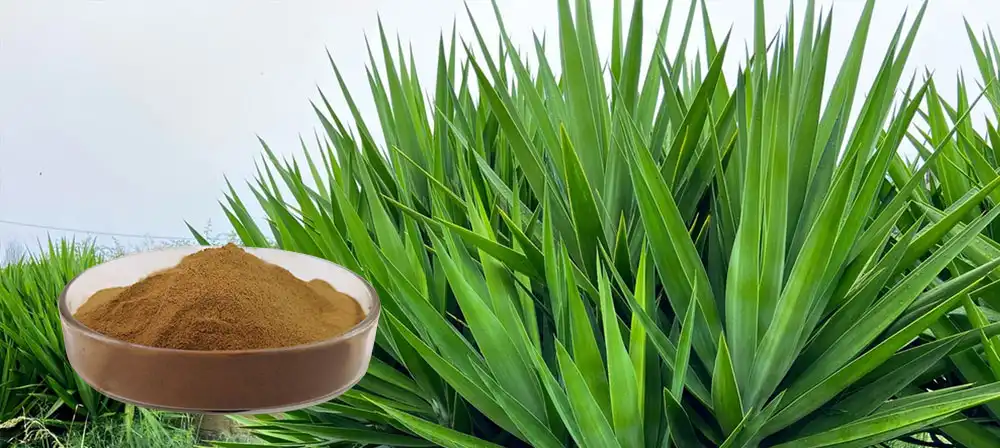
There is a plant called Mojave yucca, which is used to make yucca extract powder. This desert plant lives in the southwestern United States and northern Mexico. For manufacturers, the stems are taken out, and the liquid is boiled down and dried to make a powder. Steroid saponins, which are natural surfactants, are the main group that does something. A review from 2005 in Phytochemistry Reviews talked about the plant's phenolic compounds, such as resveratrol and yuccaols. It is important for our Yucca Extract to have 30% to 60% yucca saponins. To check this, we use TLC. After that, your formulation team won't have to use a general plant description. Instead, they will use a clear specification.
Yucca Extract vs. Yucca Root Powder
Extract and milled plant material are often mixed up when buyers look for them. Since yucca root powder is made up of ground-up plant matter, the active compounds in it change based on how old the plants are, how they grew, and when they were picked. It goes through the steps of extracting, filtering, concentrating, and drying. The amount of saponin goes up, and the consistency gets better from batch to batch. It is also possible to use a concentrated powder to get lower inclusion rates. This saves space in a premix. Even so, I believe you should compare products based on their known active ingredients and the price per dose that works. It may cost more to buy a cheaper product that doesn't have much saponin once you know the dose.
Core Specifications to Check
What does it look like, how wet or dense it is, how small the particles are, how easy they are to mix, how long it will last, if there are any heavy metals or pesticide residues, and how it can be tracked? You can get our Yucca Extract in 80 mesh, 60 mesh, or a particle size that you choose. It will stay good for two years. We use HPLC, TLC, UV, and AAS instruments. We send a lot of our work to outside labs like NSF, SGS, and Eurofins. The batch COA is more important than any marketing claim because it shows you exactly what you will get.
Yucca Extract Powder Benefits for Feed Premixes and Farm Nutrition
Ammonia and Odor Management
Animals are less comfortable in environments with high ammonia levels, which can also reduce air quality. To understand how yucca saponins may help reduce ammonia and odors, researchers have investigated their effects in animal production. A 1994 study published in Applied and Environmental Microbiology examined the effects of yucca extract on ammonia levels in the rumen, while Cheeke's 2000 review in the Journal of Animal Science discussed these applications and the variations in results across trials. Yucca extract powder may be considered as part of an ammonia management strategy, but its effectiveness depends on factors such as animal species, diet, manure mixing, ventilation rates, and manure pit management. It can be a useful addition to a farm management program, but it should not replace proper hygiene, adequate airflow, or veterinary advice.
Gut Health and Feed Efficiency
Saponins are molecules that do their job on the outside. In 2002, the British Journal of Nutrition published a review that talks about how they change cell membranes and how nutrients and microbes in the gut work. We know that Yucca Extract can help keep the microbiota in the gut in balance, make it easier for nutrients to be absorbed, and boost the feed conversion ratio (FCR). Polyphenols that are found in nature may also help reduce swelling in the digestive tract. Your real gain will depend on what you eat and how many animals you have. Before you start the full program, I think you should do a small test with clear measurements, such as measuring your FCR, the quality of your stool, and the amount of ammonia in the air.
Applications Across Species and Formats
Yucca extract powder can be used in aquaculture, dairy, horse, pet, poultry, and swine programs as long as it doesn't break any local laws or need to be approved for a specific species. A fine, well-mixed powder with the right particle size and flow is needed for even low-dose mixing in dry premixes, mineral blends, and feed additive carriers. Yucca Extract can also be turned into powders, granules, or liquids based on your needs. That is, a company that makes liquid feed can get supplies from the same company that makes dry premix. Early on, you should let people know about your species and product format. This is because those things will affect the carrier, mesh size, and dispersibility needs.
How Bulk Yucca Extract Powder Is Made and Selected
From Raw Plant to Standardized Powder
The first steps in commercial production are to check the plants and get the raw materials ready. The next steps are to filter, concentrate, dry, and extract the substance. To make things easier, your team can use the same formula for each lot by setting a clear goal, in this case, total yucca saponins. Through in-process checks and finished-batch tests, differences are found before they are sent out. Our QA and QC teams keep an eye on production in real time, and the people who run the factory follow HACCP and GMP rules. Once it's been sent, check how well it dissolves, how well it spreads, how big the particles are, and what kind of carriers are in your own liquid mix or premix. Things don't always work the same way in the lab as they do in real life.
Spray Drying and Freeze Drying
Spray drying is a cost-effective option for large-scale production, while freeze-drying may be more suitable when strict moisture or quality requirements justify the additional expense. Neither method is universally better for producing yucca extract powder. The right choice depends on powder stability, production costs, saponin retention, and the intended application. Simply choosing a drying method for the feed premix is not enough; the cost and flow characteristics of the effective dosage also matter. When evaluating a supplier's drying process, don't rely solely on brochure claims. Ask for test data from your specific sample lot to verify product quality and consistency.
Choosing the Right Grade and Alternatives
Make sure the grade you choose is right for the job. You can't just switch between feed, food, and cosmetic grades. Our 30%–60% range lets you pick the strength that fits your budget and plan for how much to take. The rate of inclusion may drop when the level of saponin is high. Sarsaparilla extract has a different botanical name, contains different chemicals, and is regulated in a different way. Do not see it as a simple swap that doesn't need to be changed. Standardized extracts are good for OEM products, branded premixes, and selling in more than one market because they can be dosed the same way over and over again. Powders that aren't standardized can be used for jobs that aren't too hard. If someone wants to buy organic food, they shouldn't just trust the word "natural." They should look for certificates.
How to Buy and Evaluate Bulk Yucca Extract Powder Suppliers
Define Your Procurement Scenario
First, write down the details of your project, like the type of animal, the format of the product, the target inclusion rate, the annual volume, the market you want to reach, the certifications, the packaging, and the delivery terms. Then, compare the price per kilogram to the combined cost of the freight, the rate of inclusion, and the concentration for one ton of finished goods. First, get some samples to see how they smell, move, spread, and mix with other things. We give out samples and small test orders, and the first order that we take on for real is 25 kg. It is important to talk about lead time, packaging liners, palletization, Incoterms, and customs documents when you talk about logistics. If you're in the US, we offer DDP door-to-door delivery. We ship by DHL/FedEx, air, or ocean.
Evaluating a Dependable Supplier
Anyone selling yucca extract powder should have these three things checked out:
- Role and visibility: Ask whether the company is a manufacturer, exporter, distributor, or trader. Request a video or on-site factory inspection, capacity details, and proof that certificates such as GMP, ISO 9001, or FSSC 22000 cover the actual production site and the product category you plan to buy before you place an order.
- Batch documentation: A batch-specific COA should list assay results, moisture, microbiology, contaminants, test methods, laboratory details, and release dates. Request the specification sheet, SDS, origin statement, and any third-party test reports so your QA team can compare each lot with its incoming specification. Ask how the saponin assay is run and which laboratory reports it.
- Technical support and change control: Confirm who answers formulation questions, how fast samples ship, and how the supplier handles changes to raw materials or process. Ask for a named technical contact. A written change-control procedure protects batch consistency across repeat orders and helps your production team plan each run with confidence.
Because of these checks, you are less likely to buy a powder that doesn't tell you much about it.
Why Naturalin Biotech Can Be a Long-Term Partner
Since 2006, Naturalin Bio-Resources has been in business. In 2017, Naturalin Biotech opened as a branch factory of Naturalin Bio-Resources. We are ISO 9001, FSSC 22000, GMP, HALAL, and Kosher certified, and we have more than 40 patents. You can also choose EU Organic or NOP. Please wait 24 hours for our answer. Plan ahead with the help of a lead time of 3–7 working days and ready stock. Customization that comes in powder, granule, or liquid form makes it easy for R&D teams to make changes quickly. We work with brands from around the world and give you a number of ways to pay so that the terms of your deal can fit the way you buy things.
Quality, Safety, Storage, and Practical Use in Ingredient Blends
Safety and Regulatory Checks
It depends on the type of plant, how it was made, how much of it was added, how good the product is, and the rules in that area. It could change how good it tastes, how well it works with other ingredients, or how it interacts with them if you use too much or change the formula without planning to. That's why you should talk to a nutritionist or vet about animal-specific programs. It is the job of the FDA to make sure that feed is safe in the US. AAFCO defines ingredients that are used by many state feed programs. Before you sell your product, make sure that the claims you make, the name of the ingredient, and the dosage information are all fine with the law. Your regulatory team should also look at the labeling rules in each market they visit.
Storage and Documentation
Keep the powder in a cool, dry, well-ventilated area that is out of the sun and away from water. Store it in containers that can't be opened. Switch between FIFO and FEFO to move stock around. It is possible to store our Yucca Extract for two years. There are many kinds of paperwork, but some of the most common ones are a COA, a specification sheet, an SDS, an origin statement, certificates, and information about stability. Let your QA/RA team look over these papers before the first order. Put them in with each lot because auditors will want to see the whole record.
A Practical Workflow for Ingredient Blends
Make your steps clear. You should first choose the species, format, rate of inclusion, and acceptance criteria that you want to measure. The second step is to choose the amount of saponin, the carrier, the particle size, and the certificates. Third, check how the mixture smells, how it flows, how it separates, how it dusts, and how it reacts with binders, minerals, vitamins, enzymes, probiotics, and other things. Fourth, make sure the finished product turns on and off correctly, tastes good, stays stable, and is packed correctly. As soon as the go-ahead is given, set batch specifications, incoming tests, change control, complaint handling, and regular supplier requalification. This order cuts down on the work that needs to be redone and makes things clear for the R&D and buying teams.

Conclusion
To make premixes and ingredient blends, feed and farm nutrition teams use yucca extract powder from Yucca schidigera. This is a standard botanical ingredient that is mostly defined by the amount of saponin it contains. Root powder and extract are not the same in terms of how concentrated they are or how thick they are. Saponins from yucca plants have been linked to effects on the gut and the control of smells and ammonia. Of course, the results depend on the species and the conditions of the farm. Handling and cost depend on the grade, the way it is dried, and the size of the particles. As a buyer, you should look at how much each dose costs, get batch COAs and certificates, test samples in your own blends, and make sure that the product has been looked at by both regulators and veterinarians. Making sure the supplier is checked out and giving clear instructions helps make sure that each batch of results is the same.
FAQ
What is the difference between yucca extract powder and yucca root powder?
The extract is concentrated and meets certain standards. Thirty to sixty percent of our Yucca Extract is made up of yucca saponins, according to TLC tests. It's hard to say what effects yucca root powder will have because it is made from ground-up plants. Most of the time, extract lets you lower the rate of inclusion and make the consistency of the batch better.
What are your MOQ and lead time?
You can get samples from us or place a small test order. The first order for business use is 25 kg. You should get it in 3–7 business days, as long as we have stock on hand. We ship by DHL/FedEx, air, or sea.
Which documents should I request from a supplier?
Ask for a batch COA, a specification sheet, an SDS, details on where the goods came from, certificates, and proof that they are legal in the market where they will be sold. Your QA team should look them over before the first run.
How long can I store it?
We sell Yucca Extract that can be kept for two years. Close it up and put it somewhere cool, dry, well-ventilated, out of the sun, and away from water. You can choose FIFO or FEFO rotation.
Request a Bulk Yucca Extract Powder Specification and Quote
Need a company to make yucca extract powder that has the right amount of saponin, mesh size, and packaging for you? When you buy yucca saponins from Naturalin Biotech, you have to order at least 25 kg. You can also get samples or small test orders from them, as well as ready-to-ship items all over the world. Send an email to market@naturalinbio.com with the species, amount, and where you want the goods sent, or visit naturalinbio.com and ask for a sample or bulk price.
Please note: All products and related services on this website are offered exclusively to corporate clients. We do not accept orders from individual buyers or retail orders.
References
1. Journal of Animal Science, 2000 – Cheeke PR. Actual and potential applications of Yucca schidigera and Quillaja saponaria saponins in human and animal nutrition.
2. Applied and Environmental Microbiology, 1994 – Wallace RJ, Arthaud L, Newbold CJ. Influence of Yucca shidigera extract on ruminal ammonia concentrations and ruminal microorganisms.
3. Phytochemistry Reviews, 2005 – Piacente S, Pizza C, Oleszek W. Saponins and phenolics of Yucca schidigera Roezl: chemistry and bioactivity.
4. British Journal of Nutrition, 2002 – Francis G, Kerem Z, Makkar HPS, Becker K. The biological action of saponins in animal systems: a review.
5. Journal of Animal Science, 1999 – Hristov AN, et al. Effect of Yucca schidigera on ruminal fermentation and nutrient digestion in heifers.
6. AAFCO Official Publication, 2024 – Association of American Feed Control Officials. Ingredient definitions and feed labeling guidance.